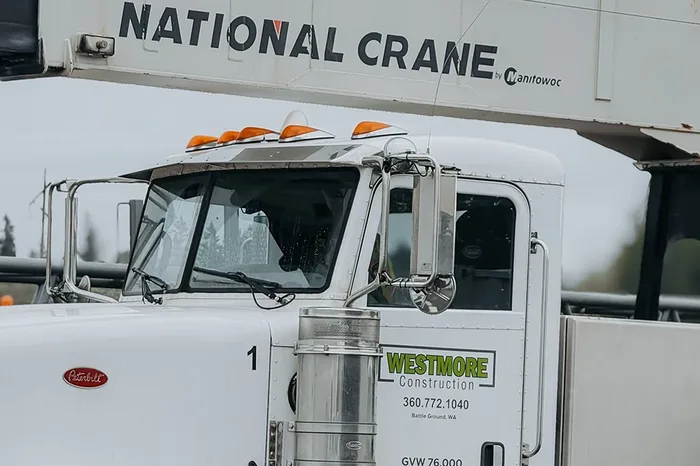

Rooftop HVAC units set on your changeout date, with the crane sized to the roof and the street permit handled.
An HVAC rooftop unit crane lift starts with the contractor: the unit's weight and dimensions, the roof height, and where the crane can set up on the site. Westmore matches a crane from its 55 to 350-ton fleet to those numbers, and when the setup has to sit in the street, the crew adds a traffic control plan and the street use paperwork to the same trip. The old unit comes off the roof and the new one lands on the curb in one mobilization.
The crane arrives with an NCCCO certified operator and the rigging gear built into the same quote. That holds whether the job is a single package unit changeout or a full commercial rooftop with several units staged for one visit.
Three kinds of rooftop and mechanical lifts make up most of the HVAC crane work.
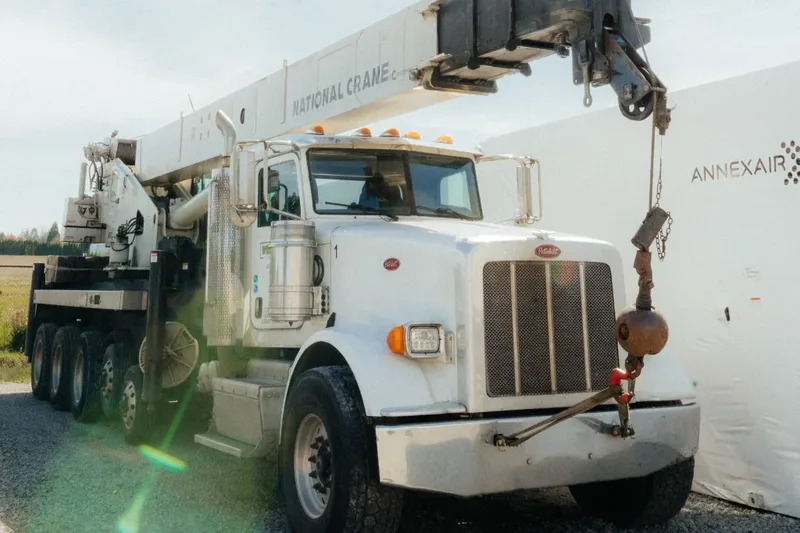
A straight changeout: the old rooftop unit comes off and the new one goes up in the same setup, sized to the unit's weight and the roof height.
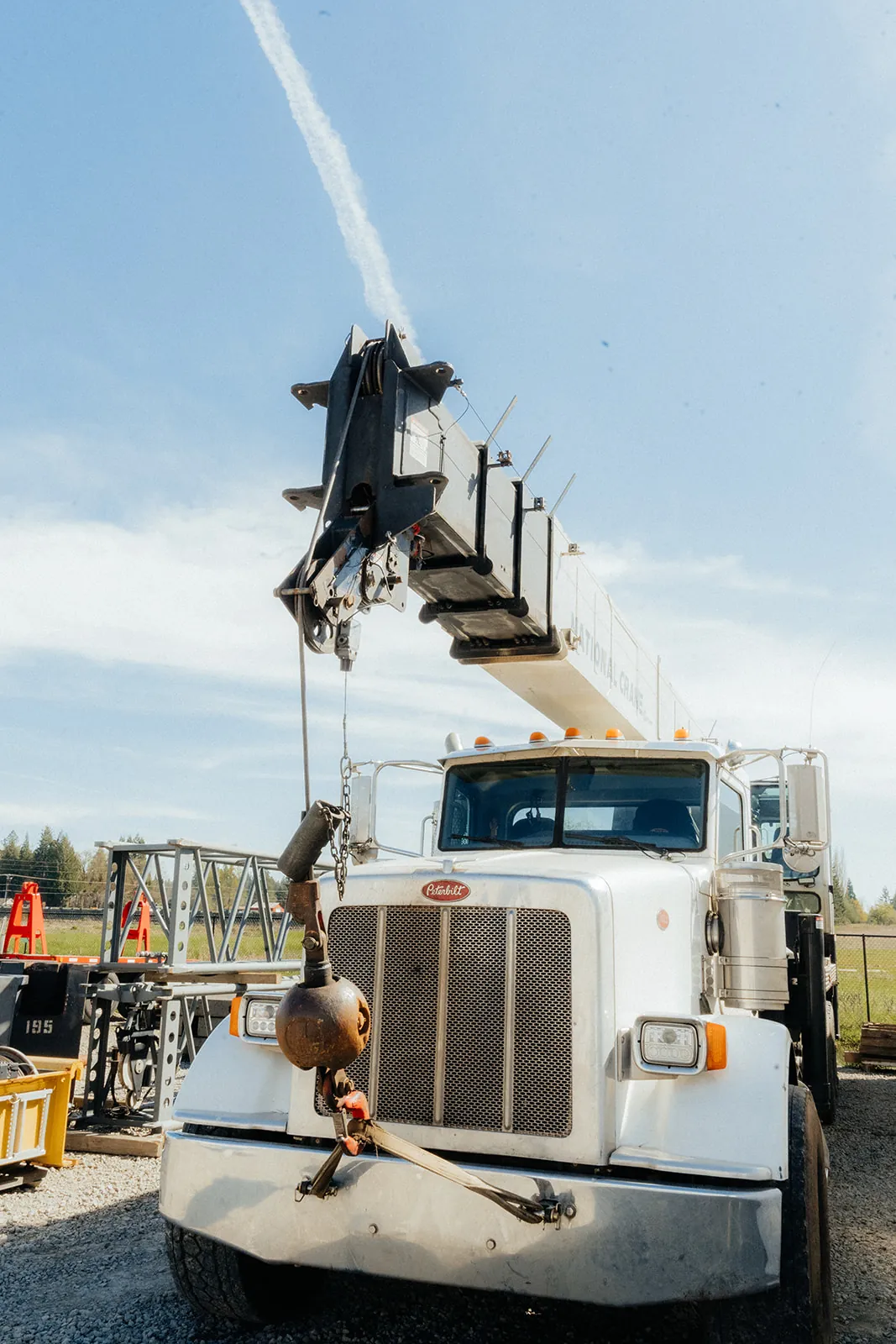
Split-system condensers and standalone air handlers get set on curbs, pads, or platforms exactly where the mechanical crew needs them, not just wherever the crane can reach.
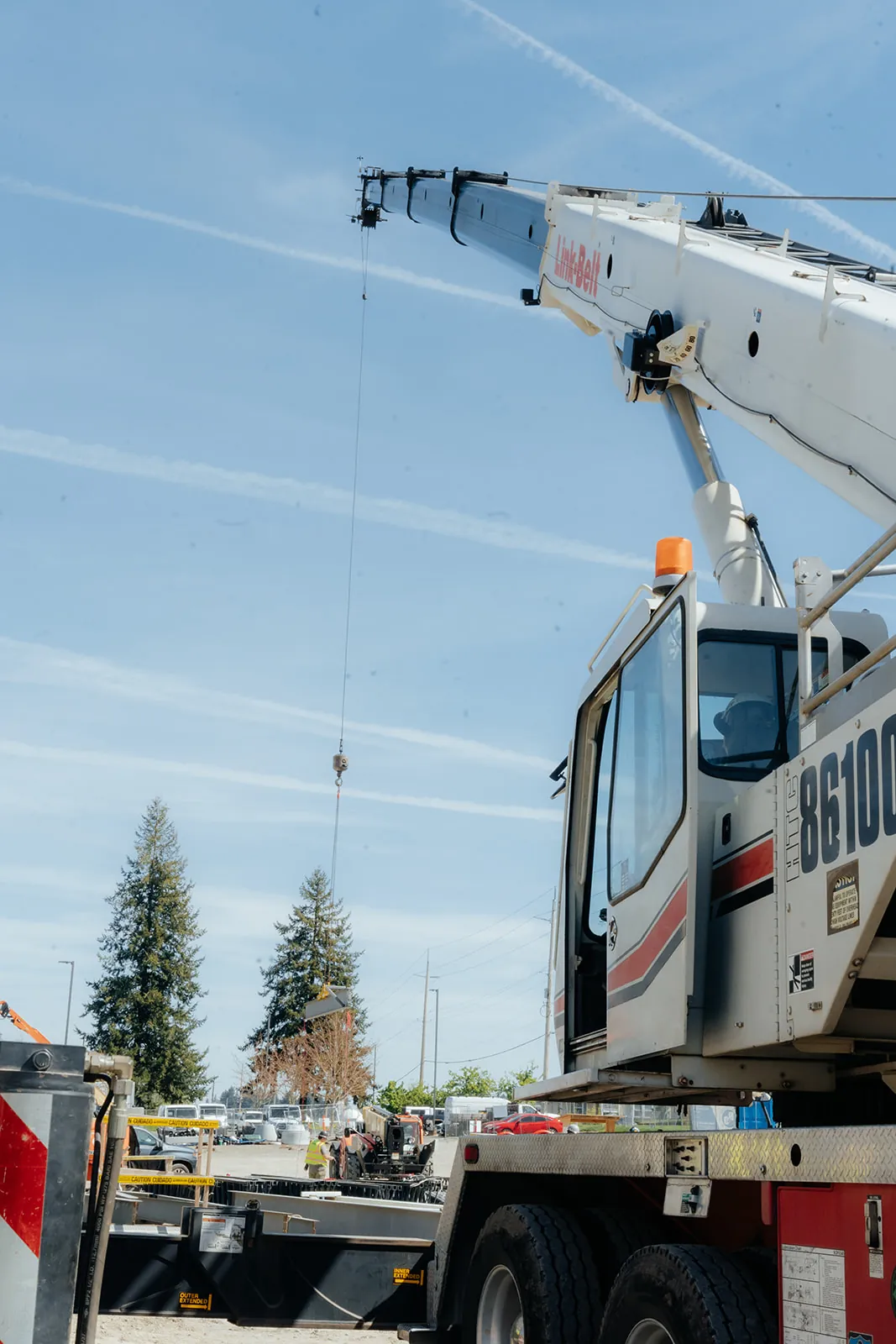
Several units across one roof, planned and priced as a single job rather than a series of one-off calls, with the crane sized to the heaviest unit in the lineup.
Four steps cover a rooftop HVAC lift, from the site details to a multi-unit job on the same visit.
A call or a few photos of the roof, the loading area, and the street out front gets the site details moving before the crane goes on the schedule.
The crew locks in a crane from the fleet and, when the setup lands in the street, opens the street use and traffic control paperwork in the same pass, so the crane shows up already matched to the job and the permit is already filed rather than pending.
On lift day the crew sets up per the plan and coordinates with whichever trade is already on the roof, so the old unit is disconnected before it comes down and the new one has its mechanical hookups ready once it lands.
A job with more than one unit moves down the list at the same site visit: the crane moves to the next position covered in the original plan instead of a separate trip.
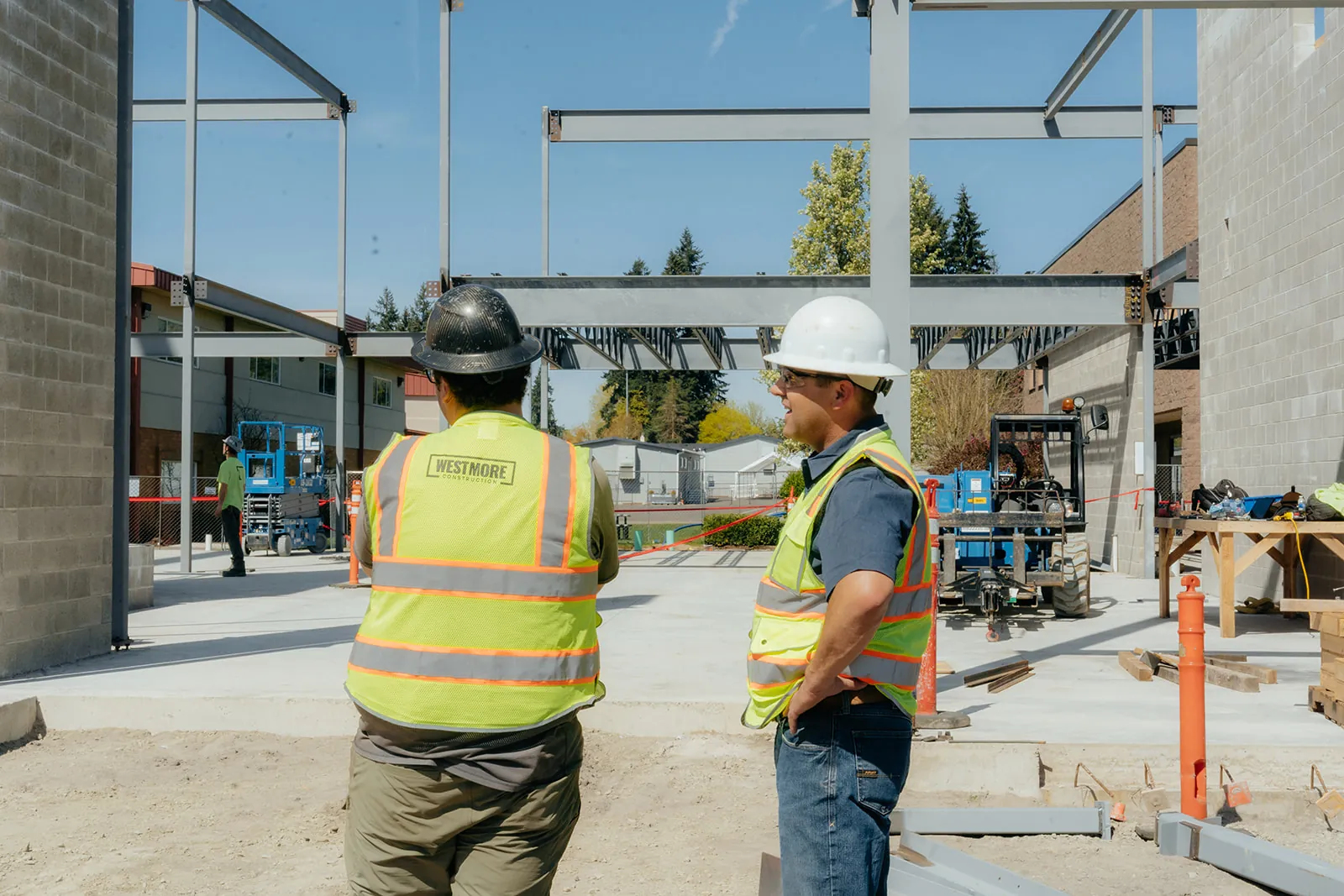
The unit's spec sheet covers the weight and dimensions Westmore needs to pick the crane class, and a roof plan or a couple of photos show the roof height along with the setback from the roof edge to the curb where the crane sets up.
The same details settle whether that setup lands in the street, when the old unit needs to be disconnected so it is ready to come off, and how many units are in the lineup if the job covers more than one rooftop position.
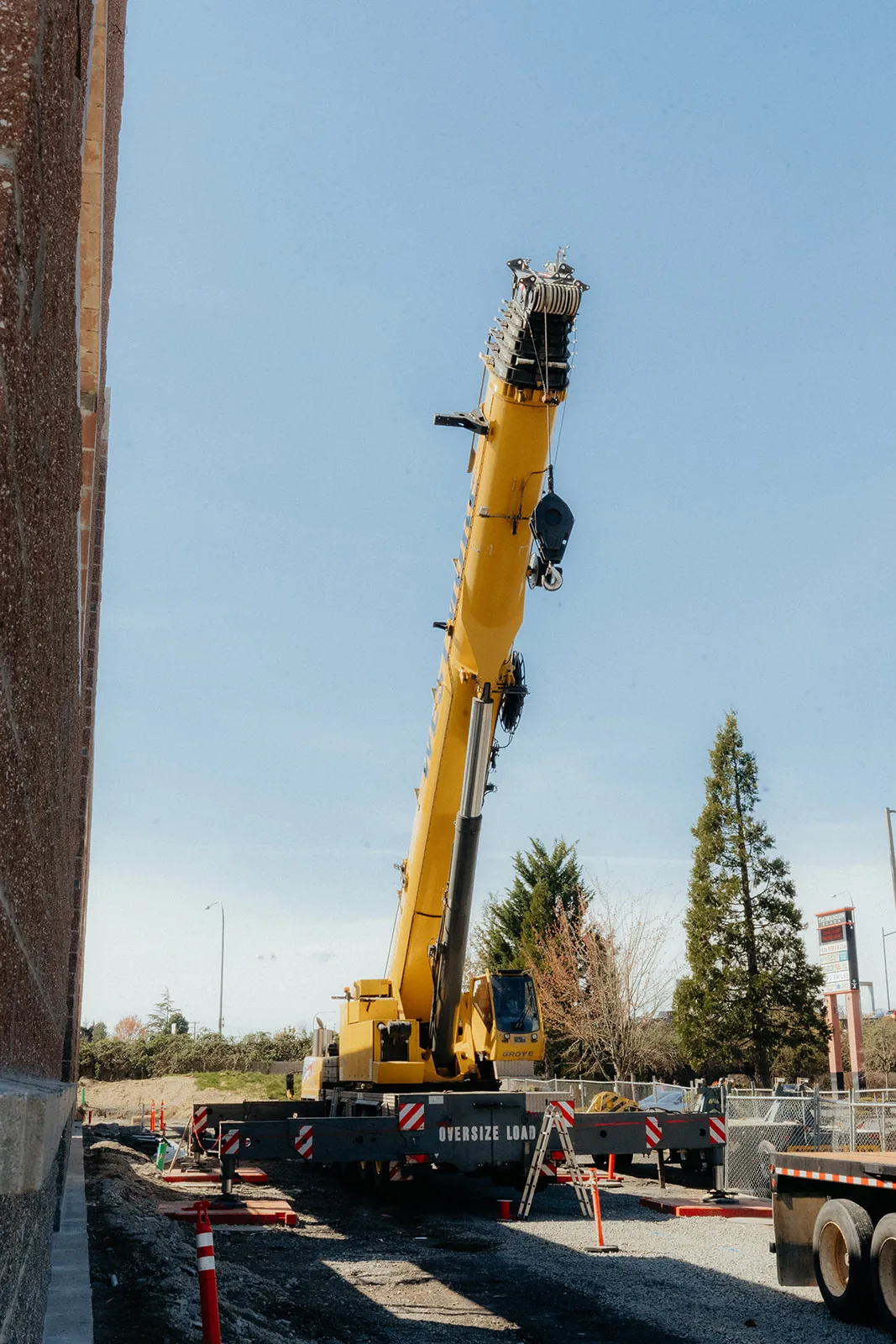
A tight urban lot or a building without yard access often means the crane has to set up in the street itself, not beside the building. Oregon and Washington can both require a street use or right-of-way permit for that kind of setup, plus a traffic control plan for the closure.
Westmore files that paperwork as part of the crane sizing, in both states, rather than leaving it for the contractor to chase down separately.
A single package unit, a large commercial air handler, and a multi-unit rooftop changeout do not need the same machine off the fleet. A crane loses rated capacity the further out and the higher it works, so the deciding figures are what the unit weighs, the working radius between where the crane can park and the roof edge it must clear, plus the height of the building itself. Read those against the load chart and one of three classes, 55, 100, or 350 tons, is the answer.
The right size for HVAC units, hot tubs and spas, beams, and tight residential or commercial sites where a bigger crane cannot set up.
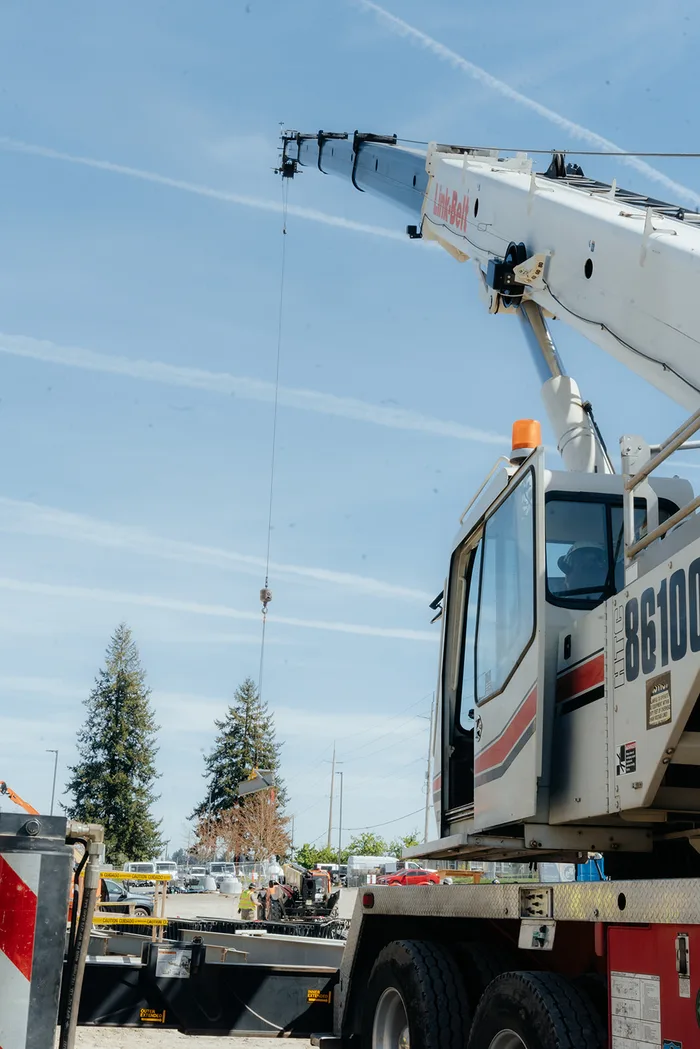
The workhorse for steel erection, precast and tilt panels, transformers, vaults, and rooftop equipment on commercial jobs.
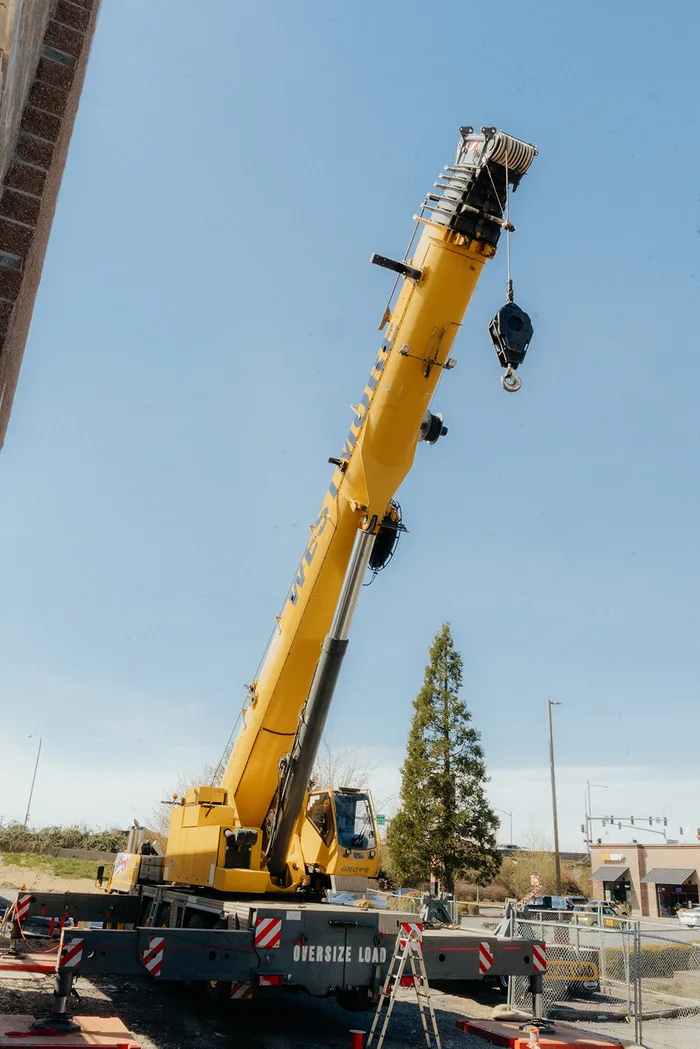
Heavy and long-reach picks: generators, large mechanical equipment, and lifts that have to clear a building from the street.
Call with the unit weight, the roof height, and the address, or send the basics below and we call back within 24 hours.
"In our HVAC company, we use Westmore whenever we need a crane on a job. They are the first ones we call and they are always happy to fit us in the schedule. They show up on time, with a good attitude, and safe work practices every time. Great company to work with!"
Google review
"Westmore Construction has always done an incredible job with our crane picks. They have always went extremely smooth and scheduling has been easy. Their crew is always on time and is very experienced. Highly recommend!"
Google review
"We use Westmore Construction for all our crane needs. They are always responsive, on-time & professional. They're fast and efficient when they show up with no down time. They have multiple sized cranes and can pretty much do anything you need. We have also worked with them on the general contracting side and have no complaints. We will continue to work together."
Google review
Roof height and how far the crane must sit from the roof edge usually matter more than what the unit weighs. Those two set the working radius, and a load chart gives less capacity the farther out and higher the boom goes, so an identical unit can call for a different class at a different building. Westmore keeps three crane classes, the largest rated at 350 tons.
Yes, and that is the normal way a changeout runs. The crane sets up once, pulls the old unit off the roof to a truck or a staging spot, then picks the new unit off the delivery trailer and lands it on the curb. The mechanical crew disconnects before the first pick and hooks up after the second, so the crane stays through both.
Only when the crane cannot set up on the property. A parking lot with enough space for the outriggers keeps the job off the street entirely. When the building fronts the sidewalk and the crane has to work from the road, the setup needs a street use permit and an approved traffic control plan, and Westmore files both as the contractor of record.
Yes, when the units sit close enough that the crane can reach them from one or two setup positions. Send the count and where they sit on the roof with the rest of the details, and the sequence gets planned around a single trip. Units at opposite ends of a large roof can still need a second setup position, and that changes the plan.
As soon as the changeout date is set. Sizing depends on what the unit weighs, how high the roof sits, and where the crane can set up, and any street use paperwork moves on the clock of the city reviewing it. Sending those details when the equipment is ordered lets the crane and the permit work run at the same time instead of one waiting on the other.
Send the unit weight, the roof height, and the site address, and Westmore sizes the crane and starts any street use paperwork before quoting the lift. Call for the fastest answer.
Battle Ground, WA
Fields marked * are required.
We call back within 24 hours. Prefer to talk? (360) 772-1040