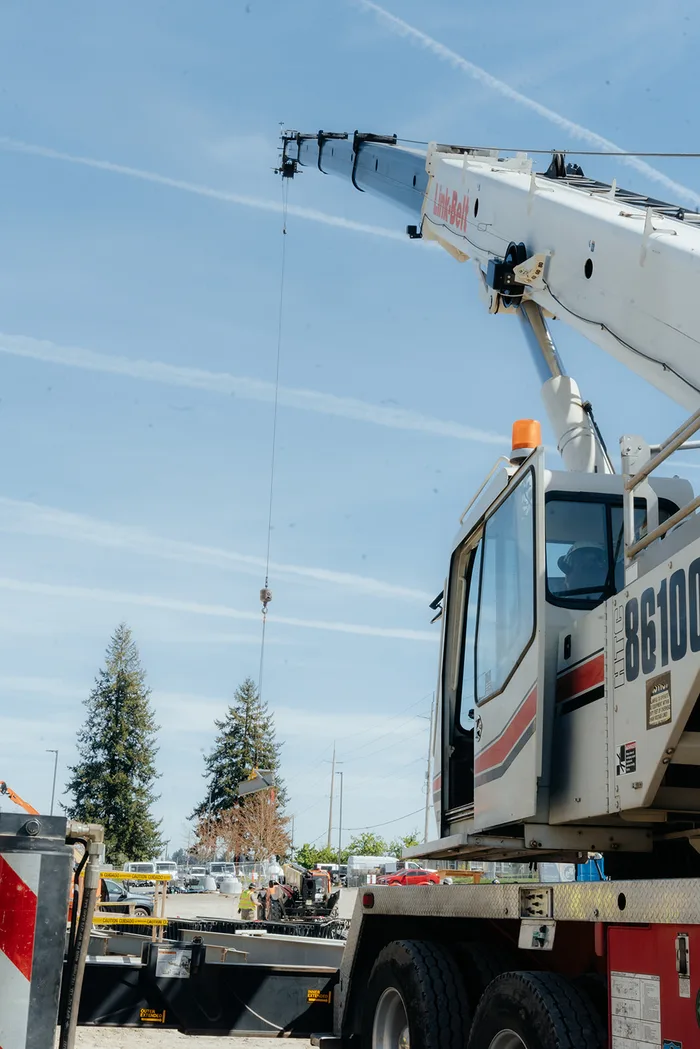
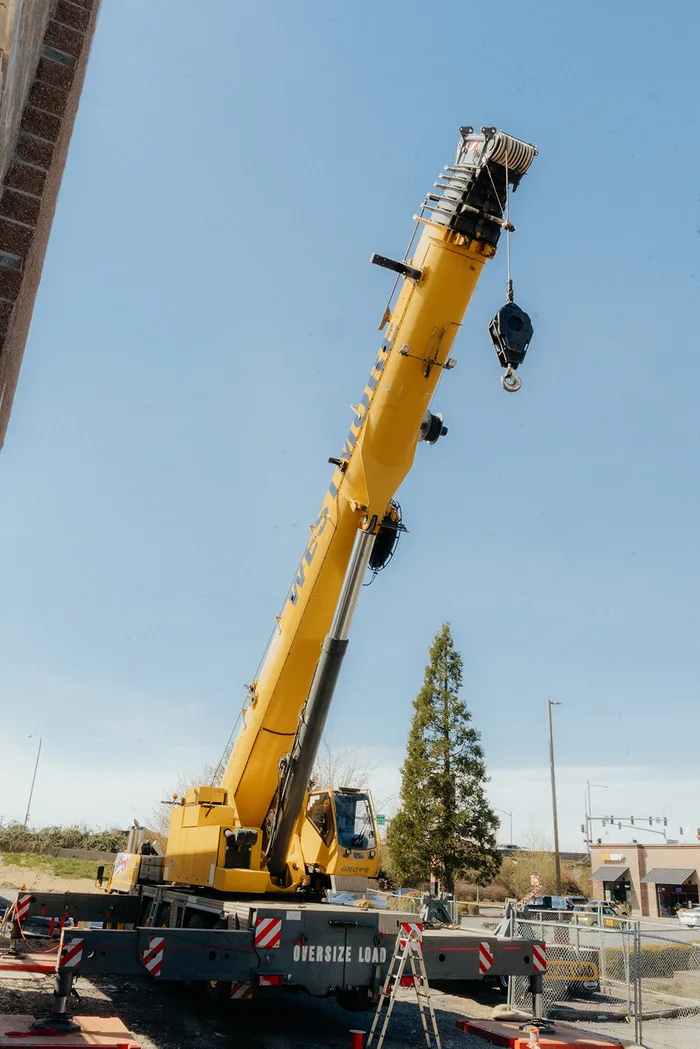
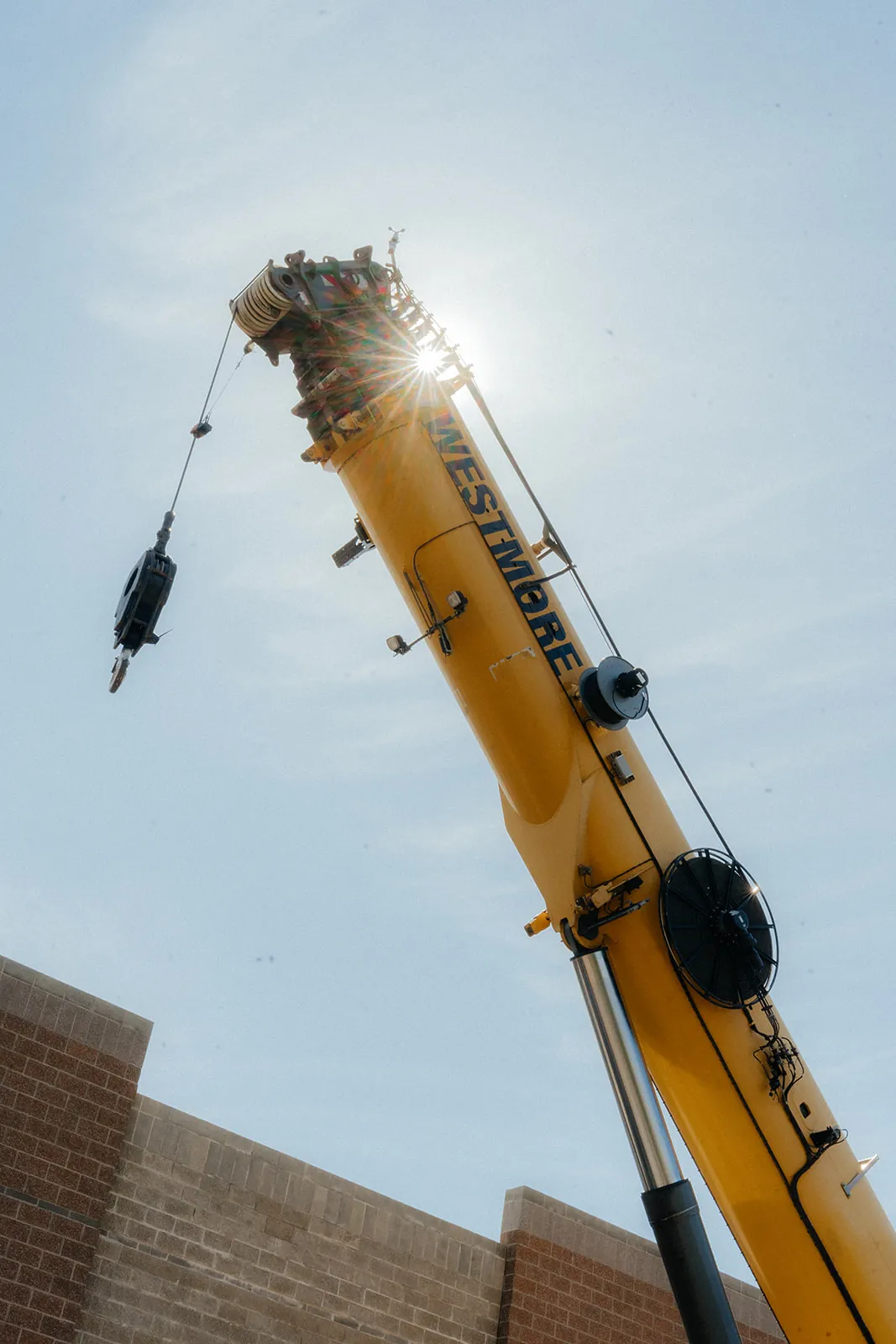
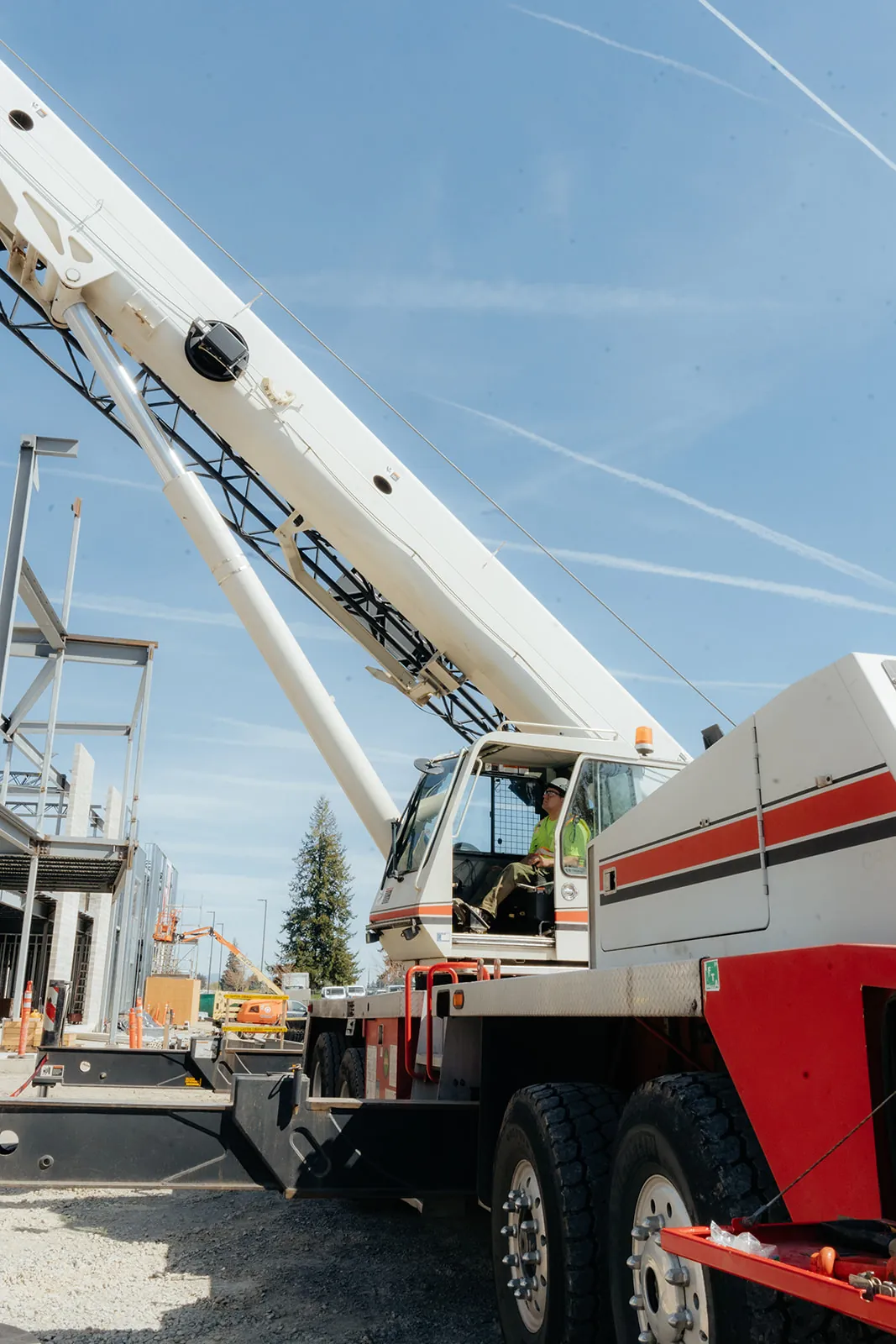
Heavy and awkward picks planned on the load chart, the setup, and the permits before the crane ever rolls.
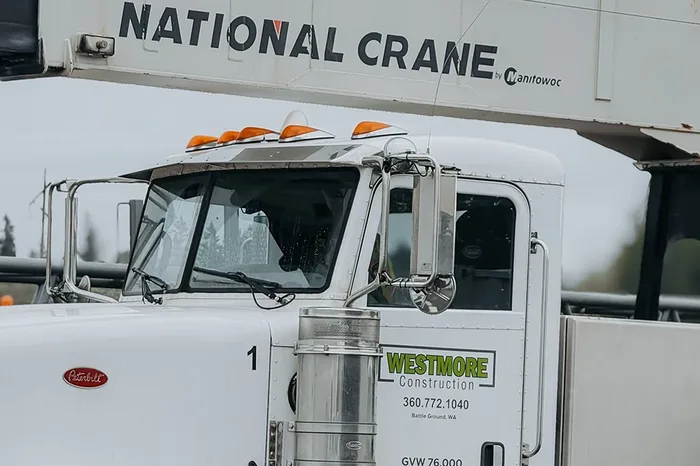
Heavy lift planning is the engineering-style prep behind a heavy lift crane job: confirming the load weight and rigging points, checking crane capacity against the load chart at the working radius, reading the ground and outrigger setup, and clearing the permits. Westmore's fleet spans 55 to 350 tons, so the call answers different numbers depending on where the job lands.
A lift needs this level of planning when the load is heavy, the reach is long, the site is tight, or the pick cannot be redone if something goes wrong. Dave Glenn's review describes a short-notice pick in downtown Portland, on the 350-ton end of the fleet, where, in his words, the crew "nailed the permit, traffic, and planning submittals in no time."
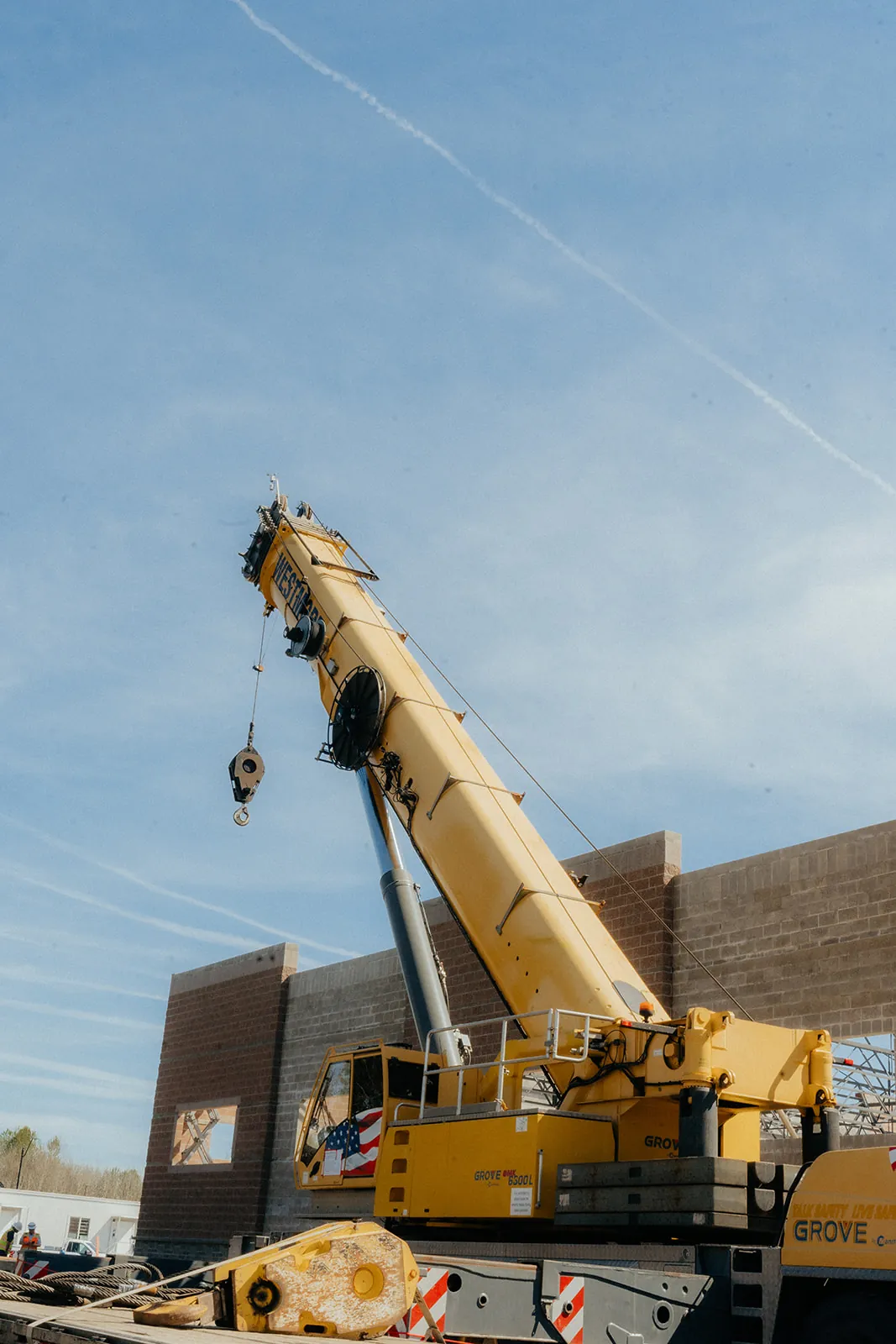
Three kinds of jobs come up past a routine beam or unit lift.
Generator sets and pad-mounted transformers need a controlled pick, since the load lands square on a pad. Thor Williamson's review describes a crane driven across the state on short notice for a Walmart generator set.
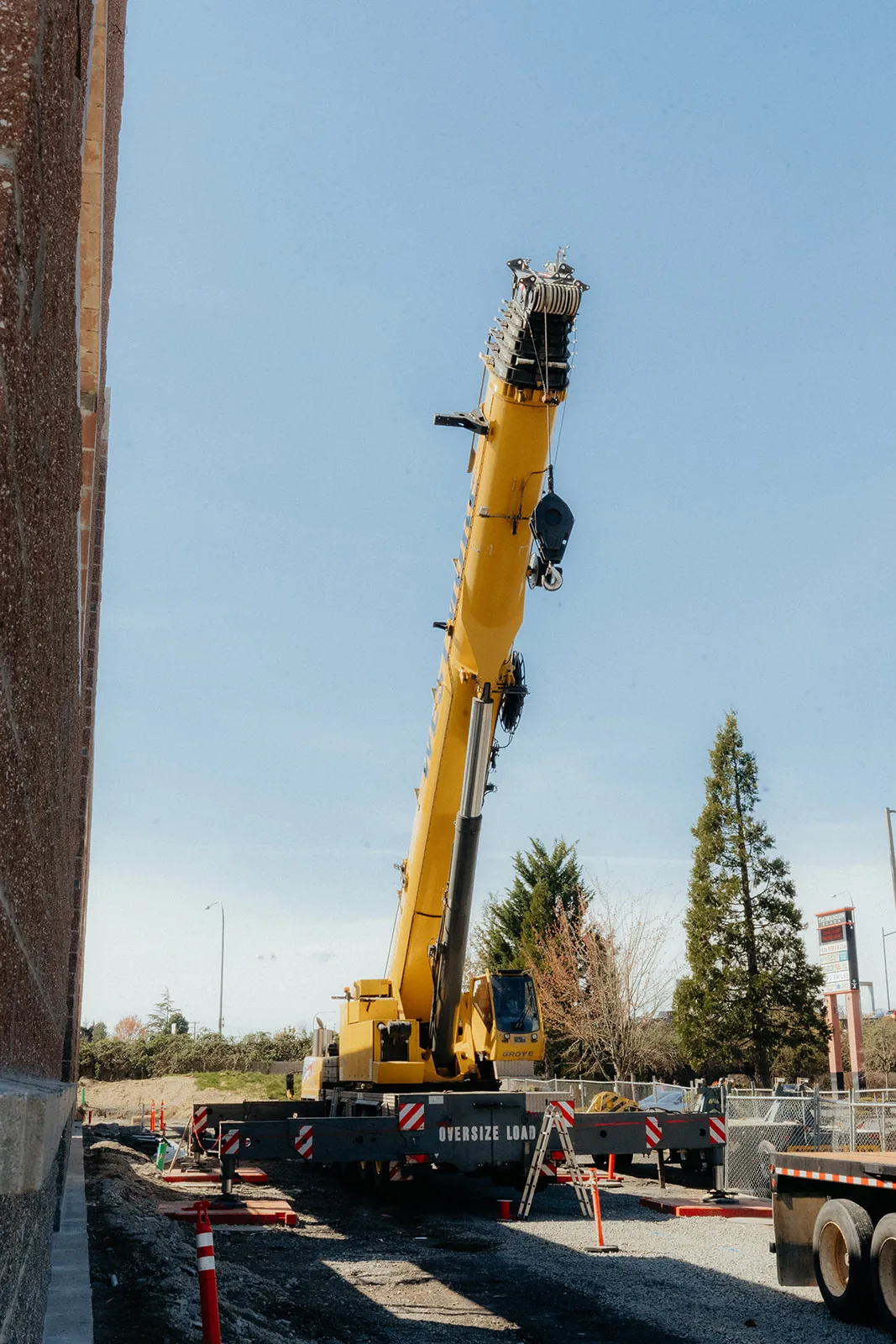
Some sites leave no room for a crane except the street out front, so the boom reaches up and over. Those picks often need a traffic control plan and a street use permit.
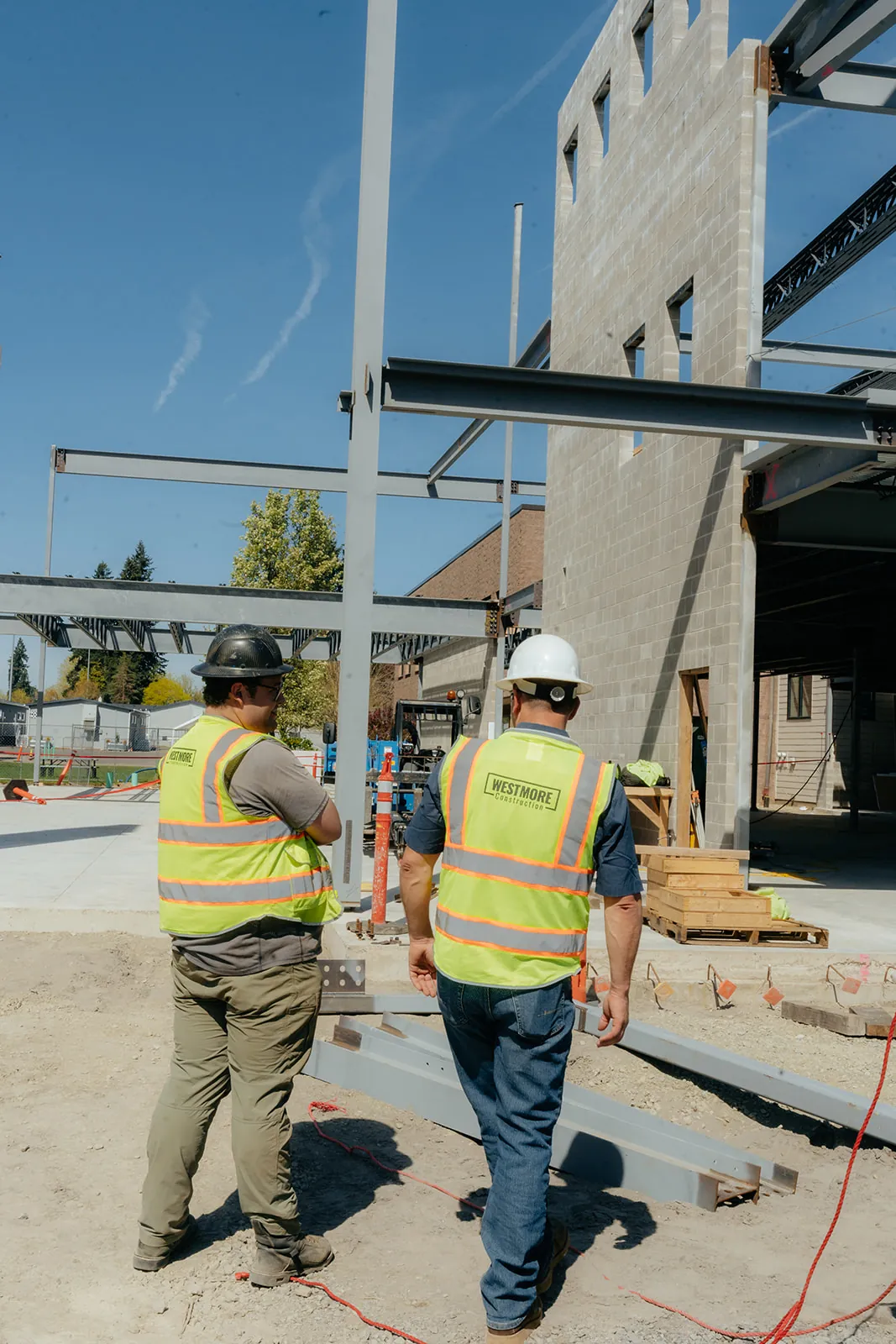
Heavy mechanical equipment on a commercial site often clears existing structure, or lands inside a partly built frame, on the commercial general contractor's schedule.
Four steps separate a heavy pick from a routine one.
Load weight, dimensions, rigging points, lift height, and setup distance come first, plus site photos when access is hard to describe by phone.
Westmore matches a crane class, 55 to 350 tons, to the load chart at the actual working radius, then plans the rigging.
When the lift touches a public street, Westmore files the oversize transport, street use, and traffic control paperwork Oregon or Washington requires.
Before the pick, the crew walks the ground, the outriggers, and the rigging. Shaun James's review of Westmore's transformer and vault picks across Clark County credits the walk-arounds for keeping the job safe.
The right size for HVAC units, hot tubs and spas, beams, and tight residential or commercial sites where a bigger crane cannot set up.
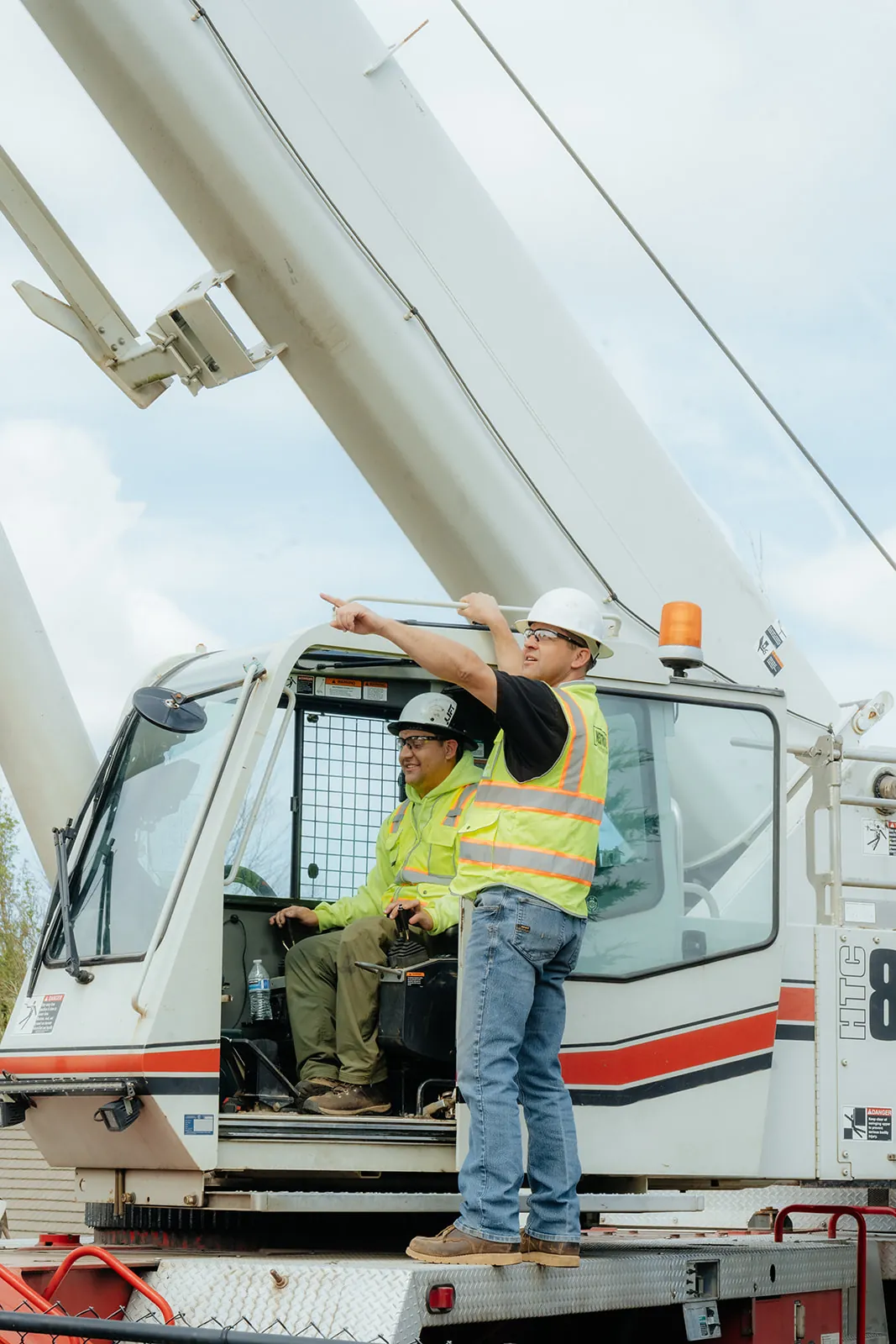
The workhorse for steel erection, precast and tilt panels, transformers, vaults, and rooftop equipment on commercial jobs.
Heavy and long-reach picks: generators, large mechanical equipment, and lifts that have to clear a building from the street.
Heavy and long-reach picks move toward the 350-ton Grove all-terrain, built for generators, large mechanical equipment, and lifts that clear a building from the street. It moves on Westmore's own trucks and trailers, so a heavy pick never waits on a third-party hauler.
A heavier crane needs more from the ground under it: outrigger placement and counterweight depend on soil that will hold under load, and a setback that keeps the boom clear of the structure next to it. Where the ground cannot take the load alone, mats spread it out first.
Call with the load weight, the address, and the date you have in mind, or send the basics below and we call back within 24 hours.
"Fast to work with me when I had a short notice crane pick request for downtown Portland. Yikes. No problem for these guys. They nailed the permit, traffic, and planning submittals in no time... They were safe, they worked fast... From the big boy 350 Ton to little boy crane needs - they are our team now."
Google review
"Think Seal Team 6 of Crane Work! Westmore was able to scramble, rearrange their schedule and drive a Crane 15 hours across the state to get us out of a jam on Generator set for Walmart, highly recommend these Professionals"
Google review
"We have did multiple projects across the greater Clark County WA area with Warren and his team, from picking our transformer or vaults or any craning needs we have. Fast, efficient, but at the same time very safe with their walk arounds and set up procedures, making sure everything is in the right order. Highly recommend them to anyone needing reputable crane services."
Google review
A lift turns critical when failure would be serious and the pick cannot simply be repeated: the load sits near the crane's rated capacity at that radius, it travels over an occupied building or a live street, two cranes share it, or the item is one of a kind. Standard practice on a critical lift calls for a written plan, the load chart checked at the working radius, and the setup confirmed in advance.
Capacity falls because the load gains mechanical advantage over the crane. The farther it sits from the center of rotation, the harder it works to tip the machine, so the load chart cuts the rated weight at every increase in radius. A 100-ton crane does not lift 100 tons out at distance; it lifts that only at a short radius on a solid setup. Radius, not weight alone, usually pushes a job to a bigger class.
Two cranes come in when one machine cannot hold the load safely at the radius required, or when the piece is long enough that a single hook would let it swing or bend. A tank, a long truss, or a tilt-up panel can call for a tandem pick where each crane carries a known share. The load chart decides whether one machine can hold it.
Permit review sets the front end. A street use permit moves on the reviewing city's calendar, and an oversize transport permit for the crane adds a state agency to the chain, so a pick that needs traffic control sits at the long end of that schedule. The engineering side depends on having the load weight, the rigging points, and the site details in hand.
Ground that can carry the outrigger loads, which concentrate the weight of the crane and the load into four pads. Asphalt, a thin slab, fresh backfill, a septic field, or a soft shoulder can all fail under that pressure even when they look solid. Mats spread the force out, and where mats are not enough the setup position moves to firmer ground before the pick gets planned.
Weight, lift height, radius, and a few site photos are what Westmore needs to size the crane and start the plan. Call for the fastest answer.
Battle Ground, WA
Fields marked * are required.
We call back within 24 hours. Prefer to talk? (360) 772-1040