
Vaults, transformers, tanks, and steel rigged with Westmore's own gear and set by an NCCCO certified operator.
Rigging services from Westmore cover everything that happens between the hook and the load. A rigging specialist plans the pick, selects the slings and hardware for the weight and shape involved, and controls the load as the crane sets it down. Customer reviews describe the range: Jared Williamson and Shaun James on concrete vaults and transformers, CJ Huxford on a fire-protection water tank, and Josiah Thomas on a sign bridge set in under an hour.
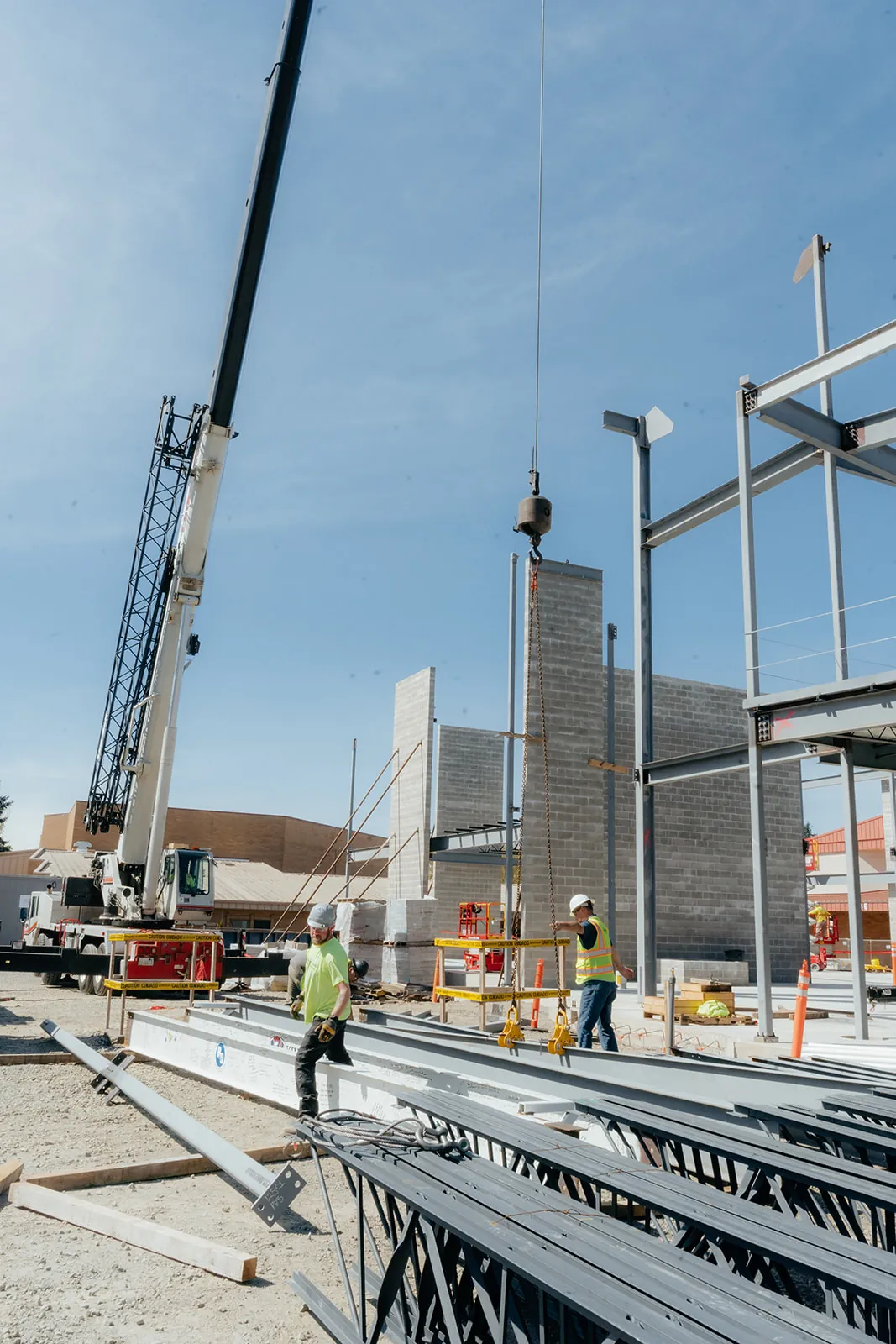
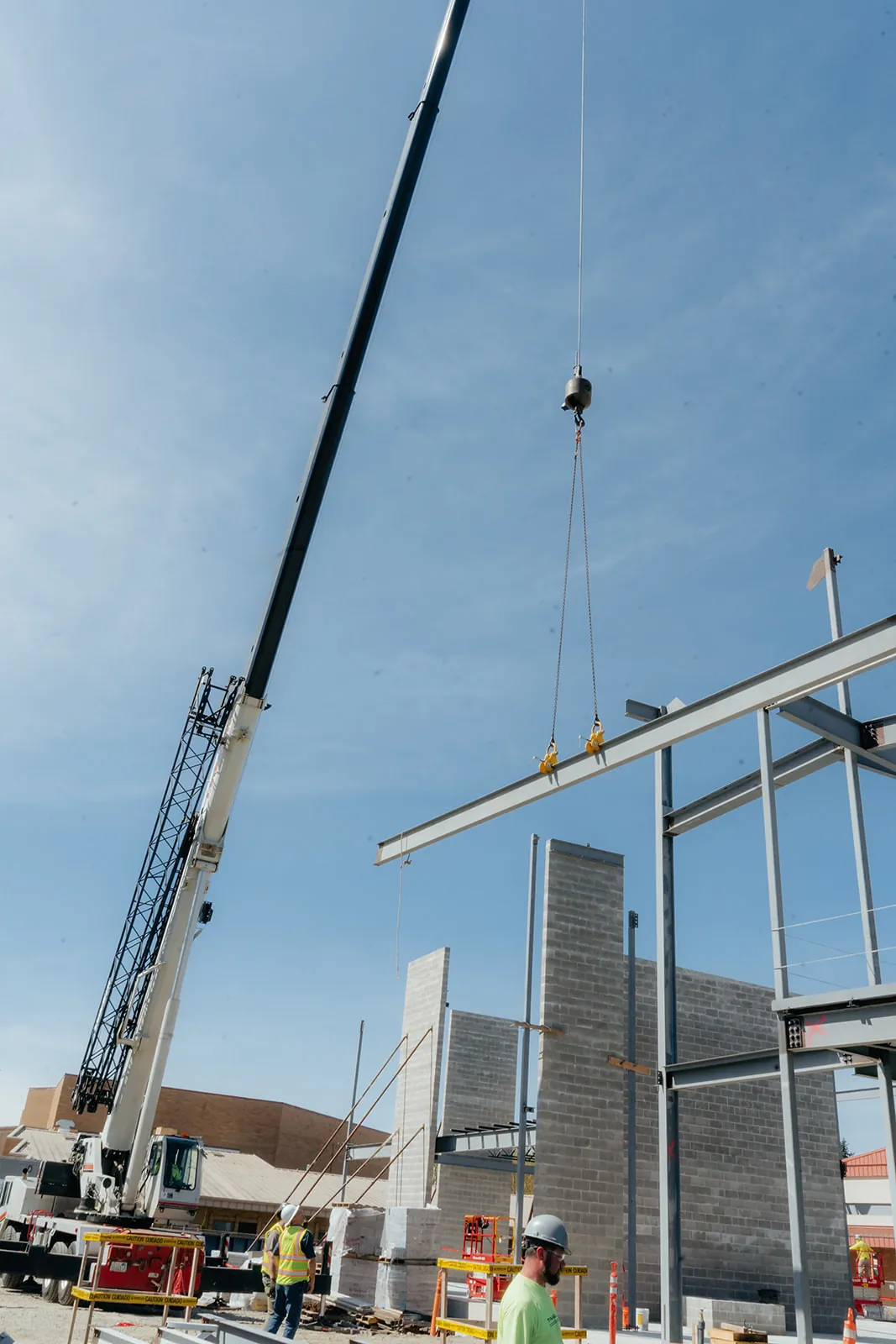
Structural steel and beams move through the same process, whether it is a single beam onto columns or a full set of panels going up in sequence. The rigging changes with the load: a concrete vault rides on chain slings and shackles rated for its weight, and a transformer needs a sling angle set to keep it level.
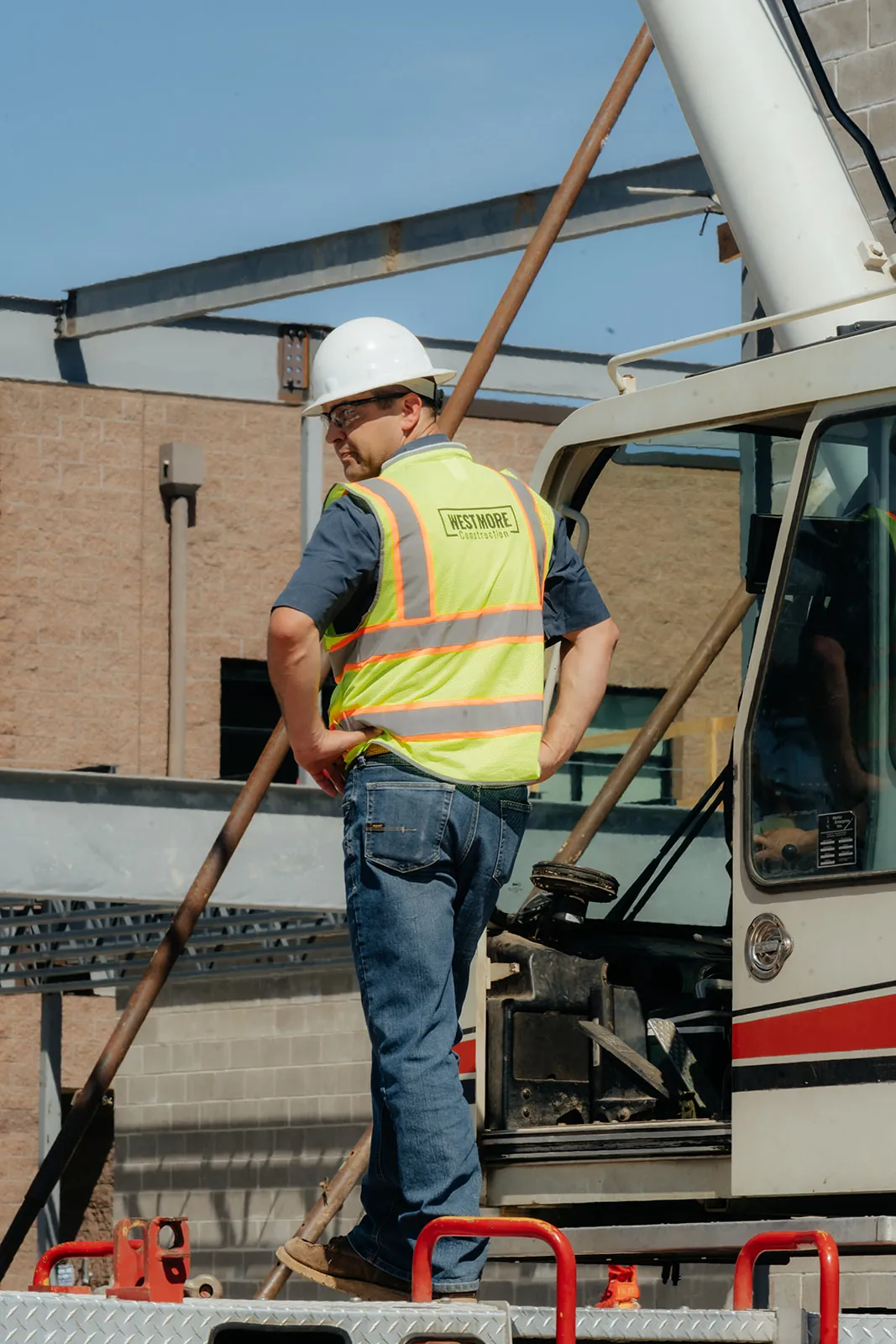
Every rigging job starts with the load, not the crane. The crew reviews the weight, the shape, and the center of gravity, then works out the sling angles and hardware.
Ground conditions and clearance count just as much. A pick next to a building or under power lines changes the rigging plan even when the weight stays the same.
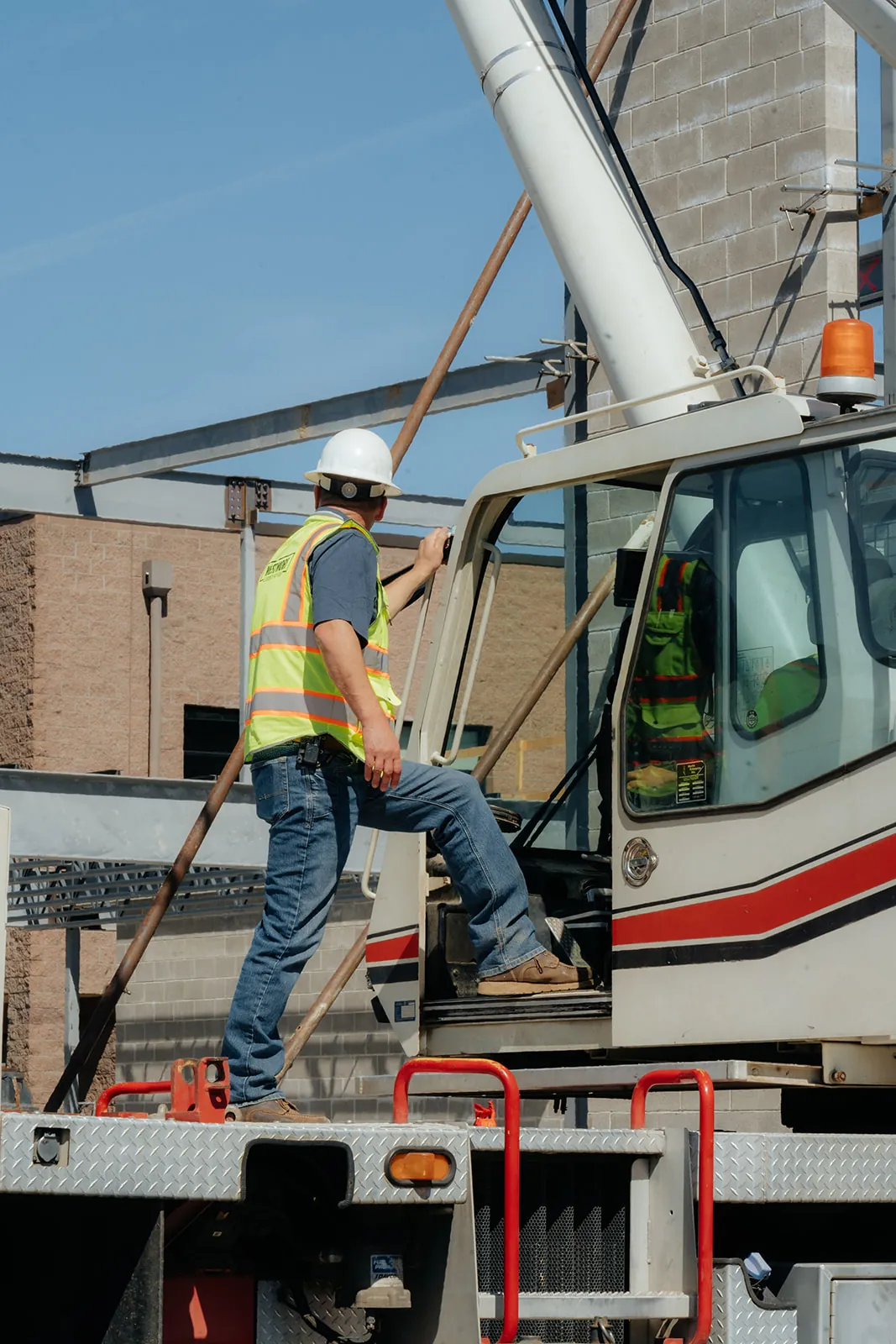
Machinery rigging calls for a different kind of control than a structural pick. Generators, pumps, and tanks need to land in an exact spot, sometimes inside a mechanical yard or a tight equipment pad.
The crew talks through the final placement first, including which way the equipment needs to face, so the set happens once instead of twice.
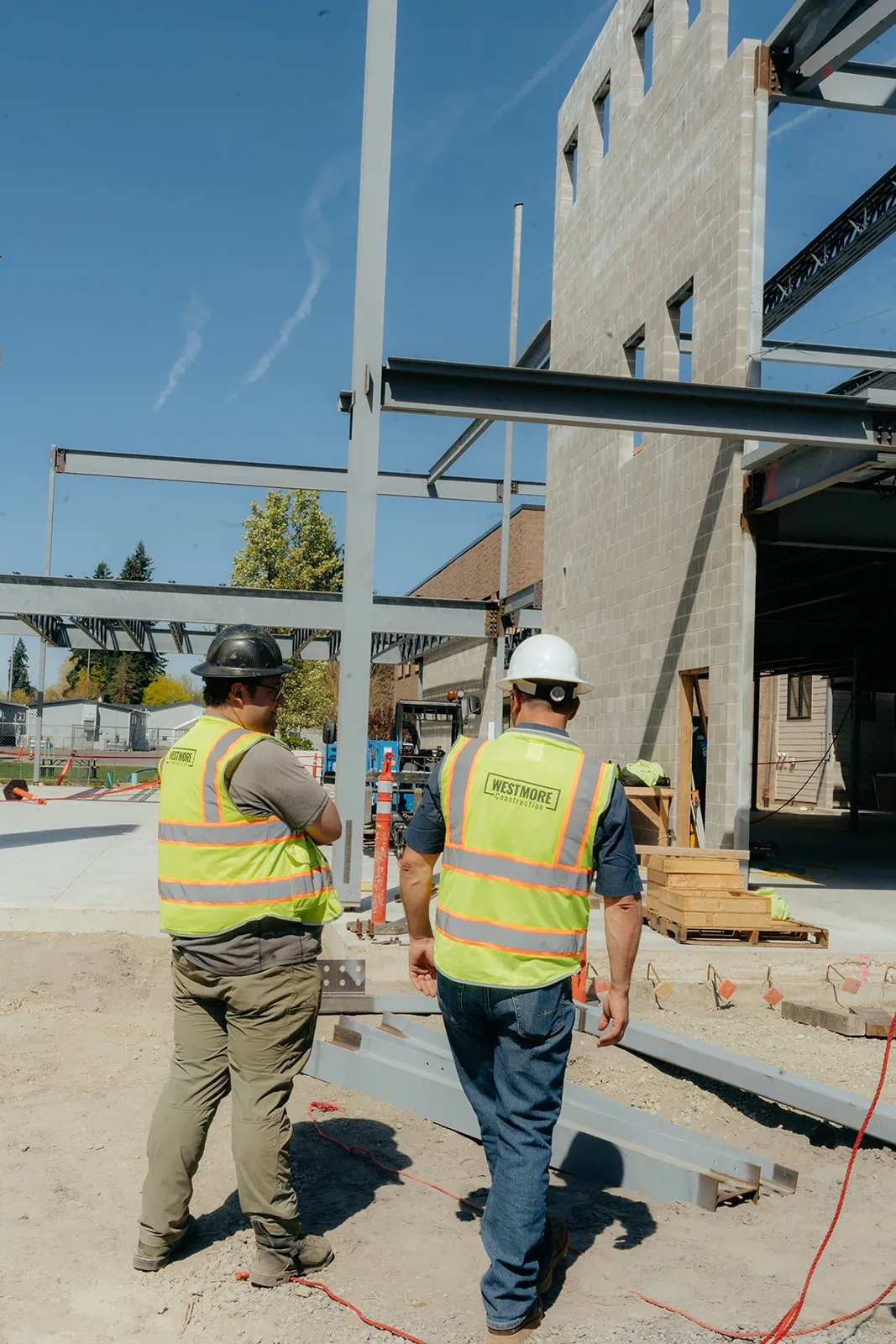
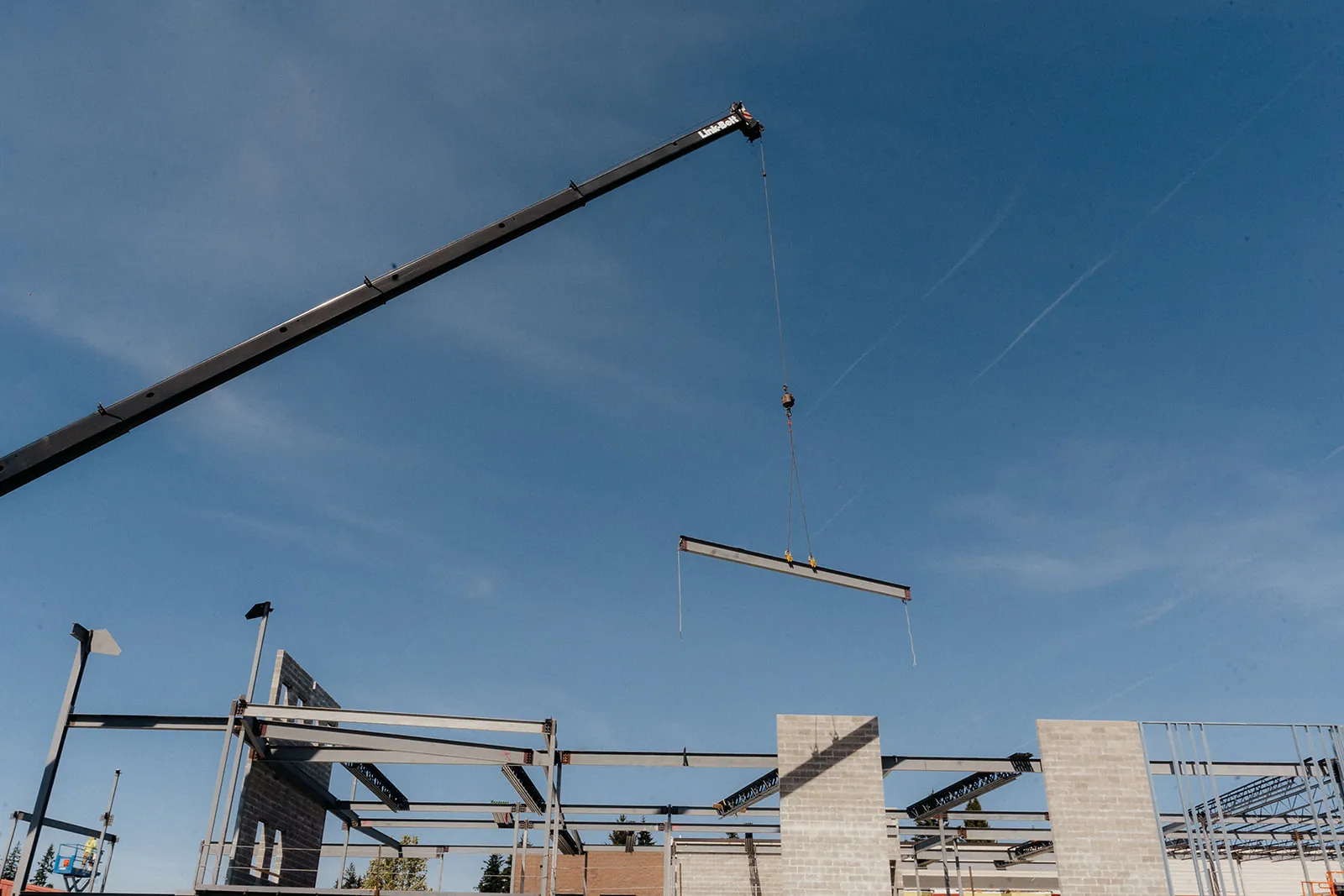
Structural steel goes up one member at a time: a beam swings onto columns, gets bolted, and the crane moves to the next pick. Precast and tilt-up panels follow the same rhythm, with sling points adjusted as panel sizes change.
Tag lines keep both loads from rotating once they clear the ground, while a ground crew member guides the connection and the operator holds the pick steady.
Hoisting and rigging follows the same four stages, whether it is a single beam or a full site of machinery and steel.
Describe the load, its weight and dimensions, and the site, or send a few photos, so the crew can start sizing the pick.
The crew works out the sling configuration and checks ground conditions and clearance before scheduling the crane.
The crane sets up at the site with the sling and hardware already matched to that specific load.
The load connects, tag lines go on where rotation needs to be managed, and the crew guides it to its final spot while the operator holds a steady lift.
Every load gets a rigging plan matched to its weight and shape before the crane sets up, not worked out once the hook is already in the air.
The crew that plans the rigging runs the pick and sets the load, so nothing changes hands between the truck arriving and the load landing in place.
Shaun James's review of Westmore's Clark County work describes the crew's walk-arounds and set-up procedures before a load moves, making sure everything is in order.
Call with the load weight, the address, and the date you have in mind, or send the basics below and we call back within 24 hours.
★★★★★"Great people to work with. We have worked with both sides, the construction team and the crane services and have been absolutely amazed with the professionalism and their communication skills. We get to hire their crane fairly often for picking larger concrete vaults and they are always quick to respond with timing and pricing for each project. We wouldn't want to use anyone else!"
Jared WilliamsonGoogle review
★★★★★"We have did multiple projects across the greater Clark County WA area with Warren and his team, from picking our transformer or vaults or any craning needs we have. Fast, efficient, but at the same time very safe with their walk arounds and set up procedures, making sure everything is in the right order. Highly recommend them to anyone needing reputable crane services."
Shaun JamesGoogle review
★★★★★"This company does excellent crane work. I've worked with several crane companies in the past and none of them showed up as prepared as Westmore. Their crew had a great attitude, communicated well, and safely set our sign bridge in under an hour. I highly recommend Westmore Construction."
Josiah ThomasGoogle review
Hoisting is the lifting itself, the crane raising and moving the load. Rigging is everything that connects the load to the hook: the slings, shackles, and spreader bars, plus the pick points and sling angles that keep the piece level and under control. A crane can lift only what the rigging can safely hold, so the two get planned together on every job.
Westmore supplies it. Slings, shackles, and the rest of the hardware a pick calls for arrive with the crane and the operator, sized to the weight and shape of the load before the crane sets up. Nothing on the customer side has to be rated, inspected, or rented, because the rigging gear comes with the crane on every job.
Yes, when the load has a path in and the crane can reach it. The opening the machine passes through, a roll-up door, a removed wall panel, or an open roof bay, has to clear the largest dimension of the load, and the crane needs a setup spot outside with a clean boom path to that opening. Send photos of the opening and of the ground outside it.
Westmore rigs its own picks. A crane never goes out as equipment alone for another company's crew to run gear on, so the people who size the slings are the same people connecting them and guiding the load in. What happens after the piece lands, such as anchoring or hookups, is scope written into the quote rather than assumed either way.
The rig gets built around the center of gravity of the load, not its middle. Sling lengths and pick points are set so the hook sits above that center and the piece hangs level, which matters on transformers, tanks, and machinery where the weight sits nowhere near the geometric center. Sling angle is the other half: the wider the legs spread, the more tension each one carries.
Send the weight, the dimensions, and where the load needs to go, and Westmore's rigging company prices the job before the crew shows up.
Battle Ground, WA
Fields marked * are required.
We call back within 24 hours. Prefer to talk? (360) 772-1040