WA WESTMCL836OJ

|

OR CCB 234945

Crane Fleet

Our Crane Fleet: 55-Ton, 100-Ton, and 350-Ton Cranes

Three crane classes, 55, 100, and 350 tons, each with an NCCCO certified operator and rigging included.

Sizing the Fleet

Which Crane Does My Job Need?

Which crane a job needs comes down to three things: load weight, lift height, and how far back the crane has to sit. Westmore checks those numbers against a fleet built in three sizes, 55, 100, and 350 tons, before quoting the job.

Weight is only part of the answer. A crane's capacity drops as the boom reaches farther from the outriggers, so a site that keeps the crane back from the load can push a light pick into the next class up, and the outrigger footprint itself has to fit the driveway, the street, or the pad. Westmore checks the setup before the tonnage and matches the class to both.
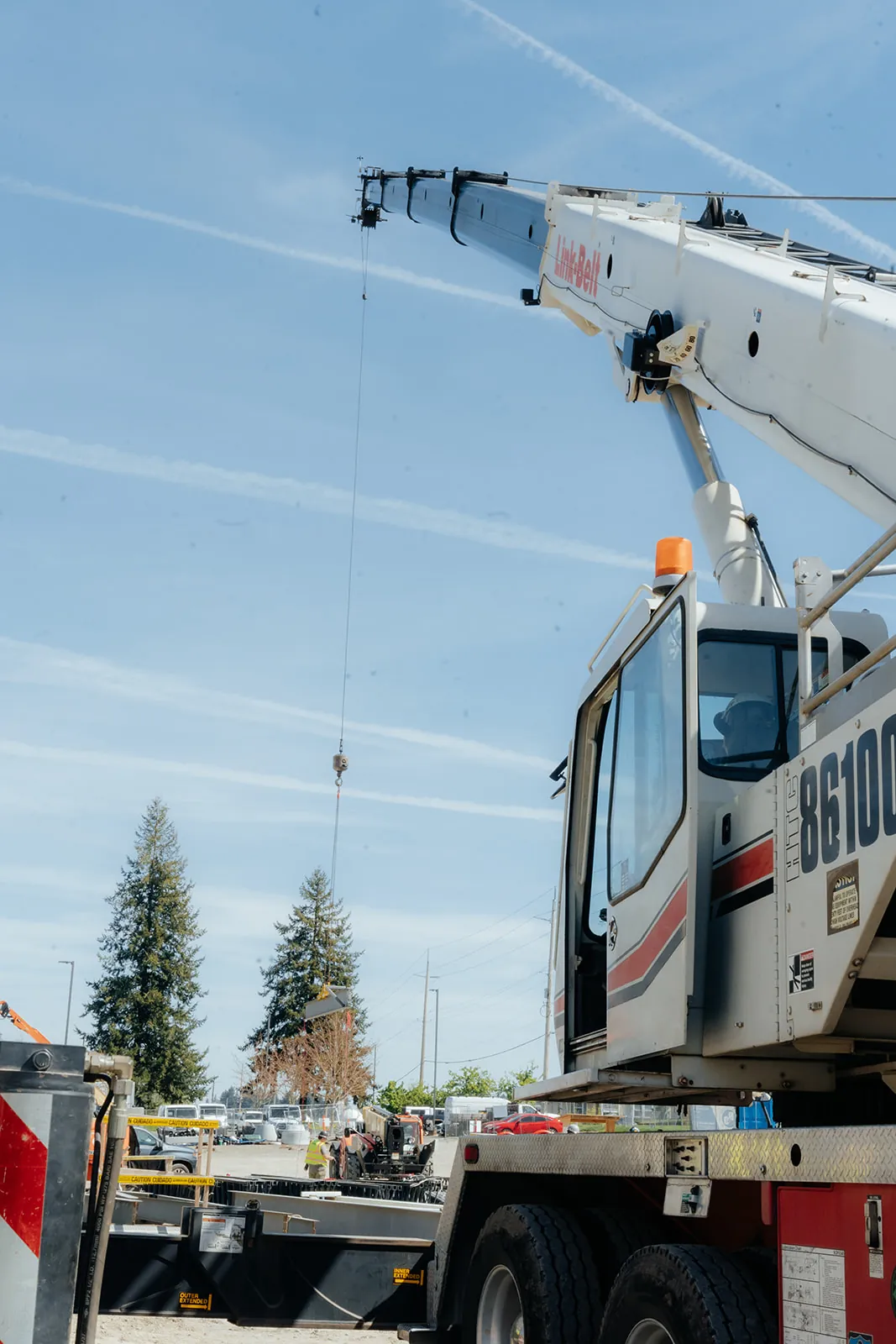
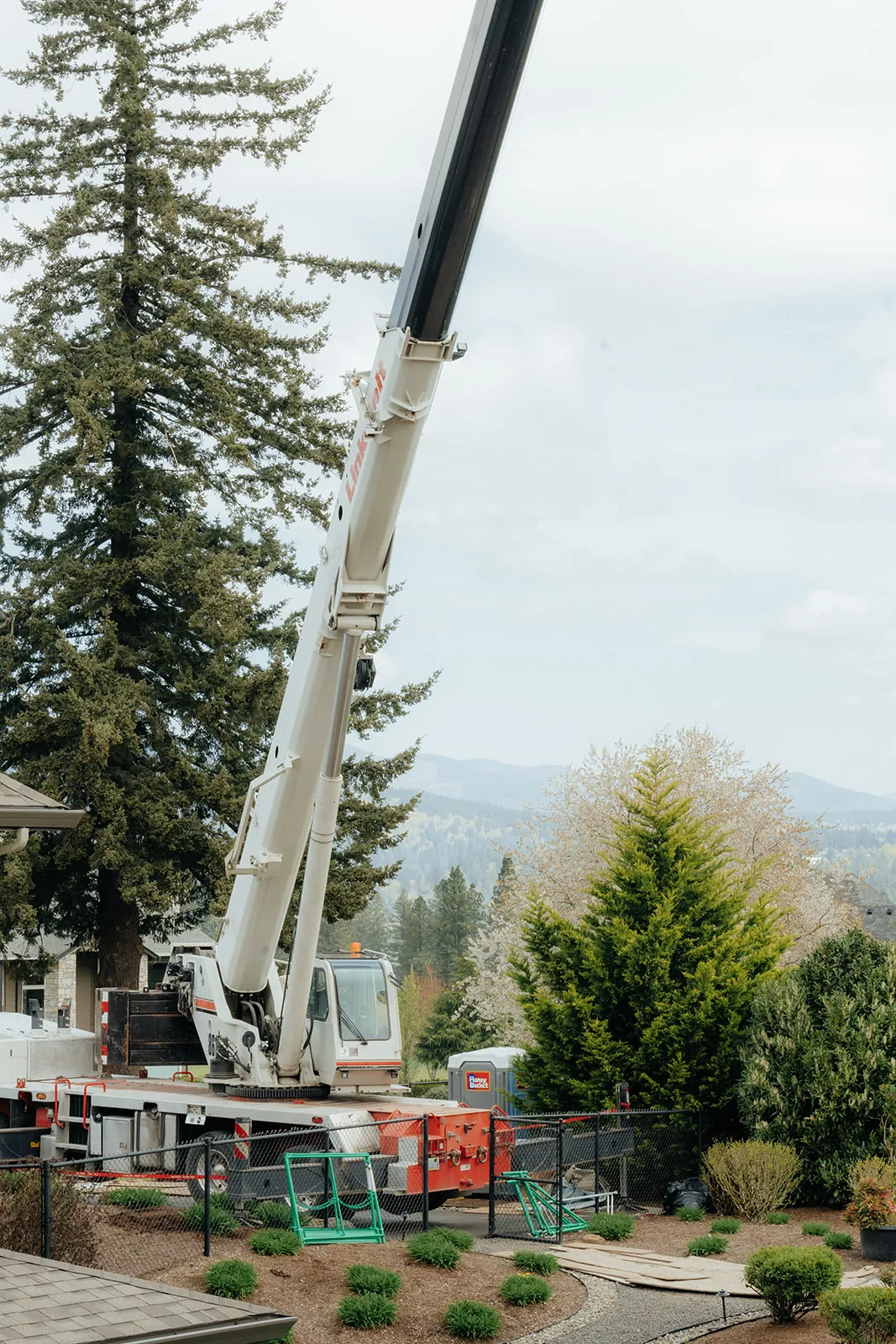
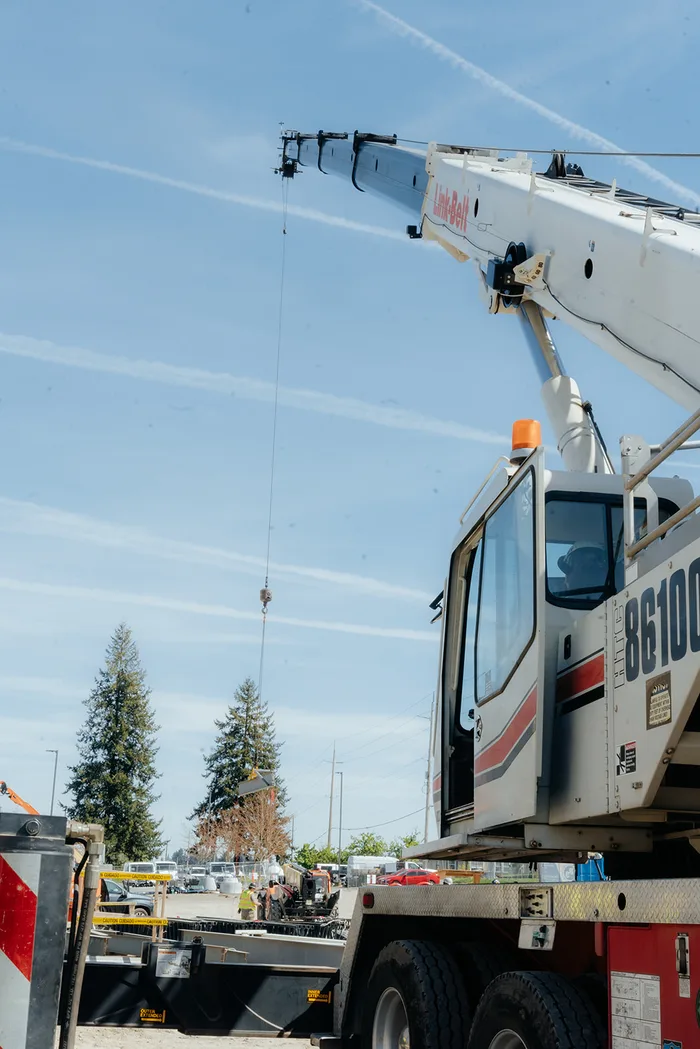
Westmore Link-Belt HTC-86100 cab and boom seen from below with an evergreen tree behind it
By The Job

Which Class Handles Your Job

Westmore crane boom raised in a landscaped residential backyard with evergreen trees

Residential Lifts

Hot tubs, swim spas, saunas, and small structures set into backyards and tight driveways, handled by the 55-ton class when the site is the limiting factor.

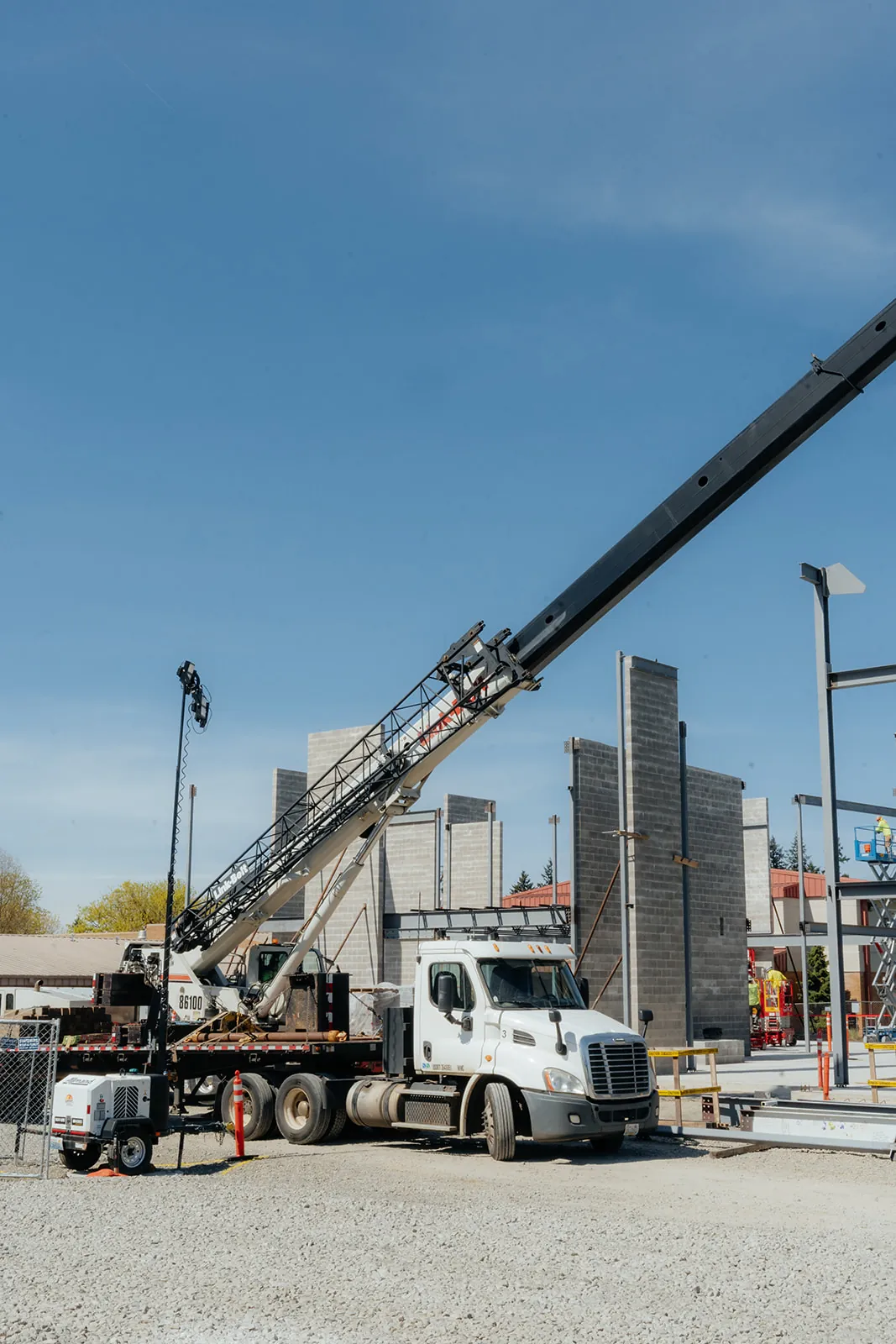
Westmore Link-Belt truck crane set up beside tilt-up concrete panels at a commercial jobsite

Commercial Lifts

Rooftop HVAC swaps, tilt-up wall panels, and structural steel raised on office, retail, and warehouse sites, where reach and weight decide between the 100-ton Link-Belt HTC-86100 and the 350-ton Grove.

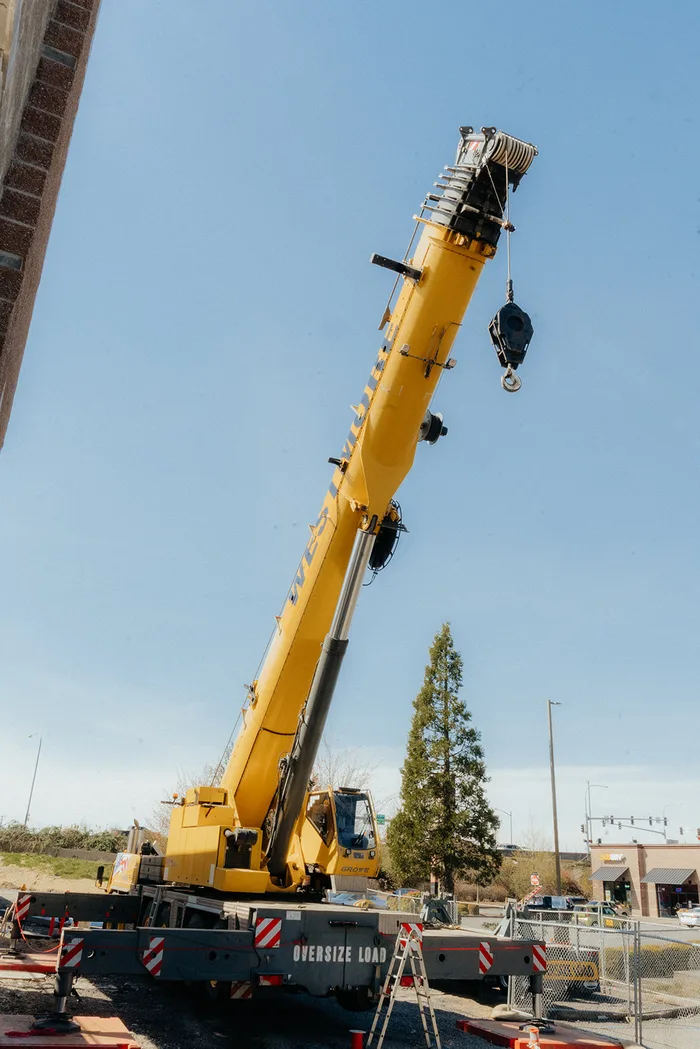
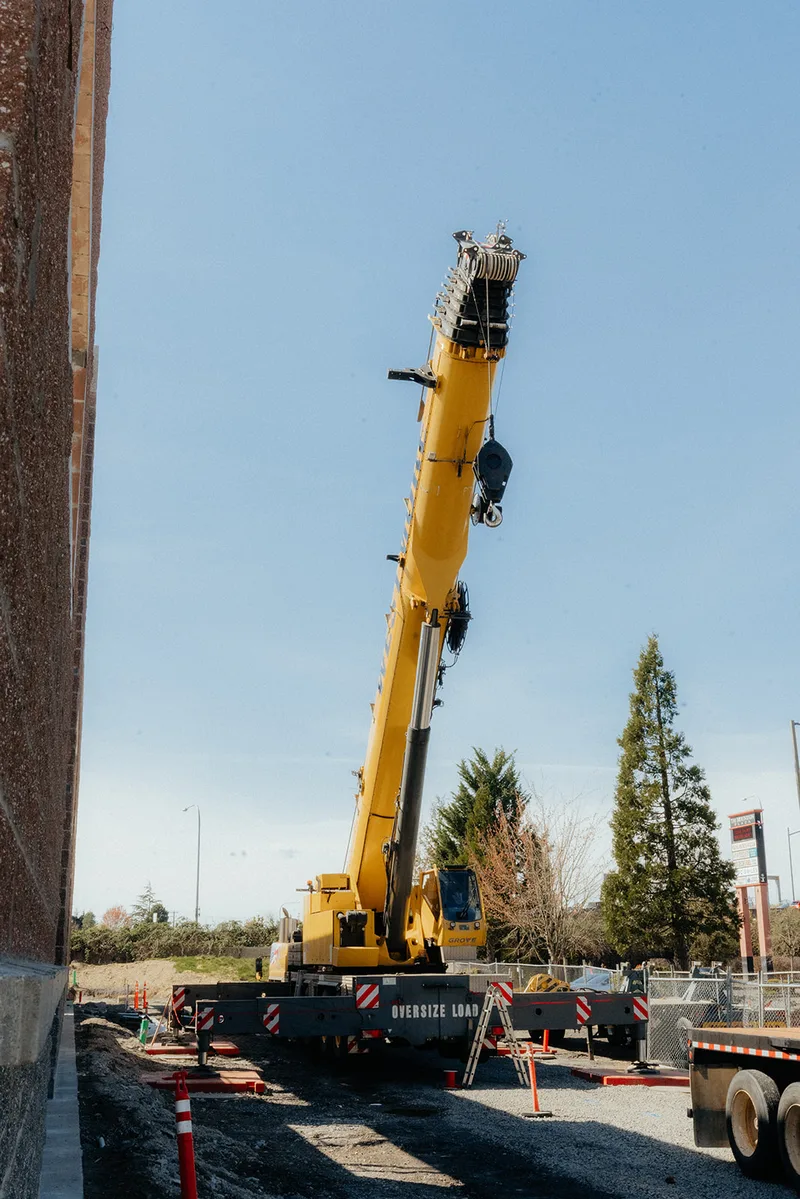
Westmore yellow Grove crane set up on a street with traffic cones beside a brick building

Industrial Lifts

Generators, mechanical equipment, transformers and vaults, and any pick that needs the 350-ton Grove's reach to clear a building from the street.

Fleet Dispatch

From Your Call to the Crane On-Site

  1. 1

    Call In

    You describe the lift: what needs to move, where it is headed, and what the site looks like, or send a few photos.

  2. 2

    Crane Match

    Westmore sizes the pick against the fleet and settles on the 55-ton, 100-ton, or 350-ton class that fits, operator and rigging assigned with it.

  3. 3

    Permit Check

    If the crane's route or the jobsite calls for an oversize transport or street-use permit, Westmore files it before the date is locked in.

  4. 4

    On-Site

    Westmore brings the crane, crew, and expertise needed to safely handle your lift from setup to completion.

The Fleet, Up Close

Three Cranes, Spec by Spec

What each class is built for, spec by spec.

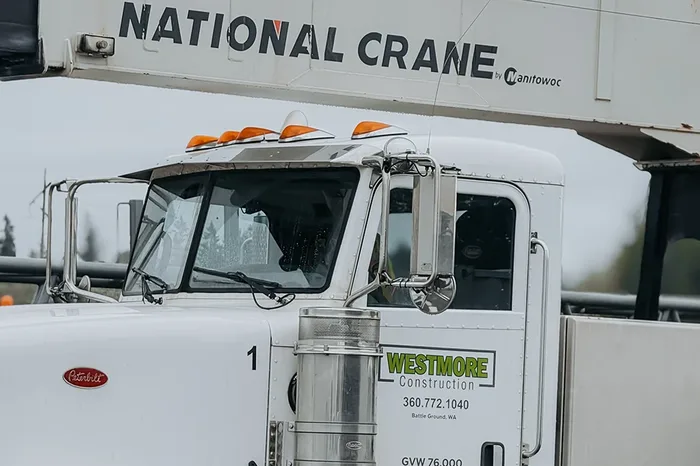
Westmore National Crane boom truck, the 55-ton class crane sized for hot tub and spa lifts
55
TON

55-Ton Class

The right size for HVAC units, hot tubs and spas, beams, and tight residential or commercial sites where a bigger crane cannot set up.

Westmore Link-Belt HTC-86100 truck crane with the boom extended over a steel frame, crew nearby
100
TON

100-Ton Link-Belt HTC-86100

The workhorse for steel erection, precast and tilt panels, transformers, vaults, and rooftop equipment on commercial jobs.

Westmore yellow Grove crane with the boom raised and the hook block beside a CMU wall
350
TON

350-Ton Grove All-Terrain

Heavy and long-reach picks: generators, large mechanical equipment, and lifts that have to clear a building from the street.

Behind Every Lift

What Comes With the Crane

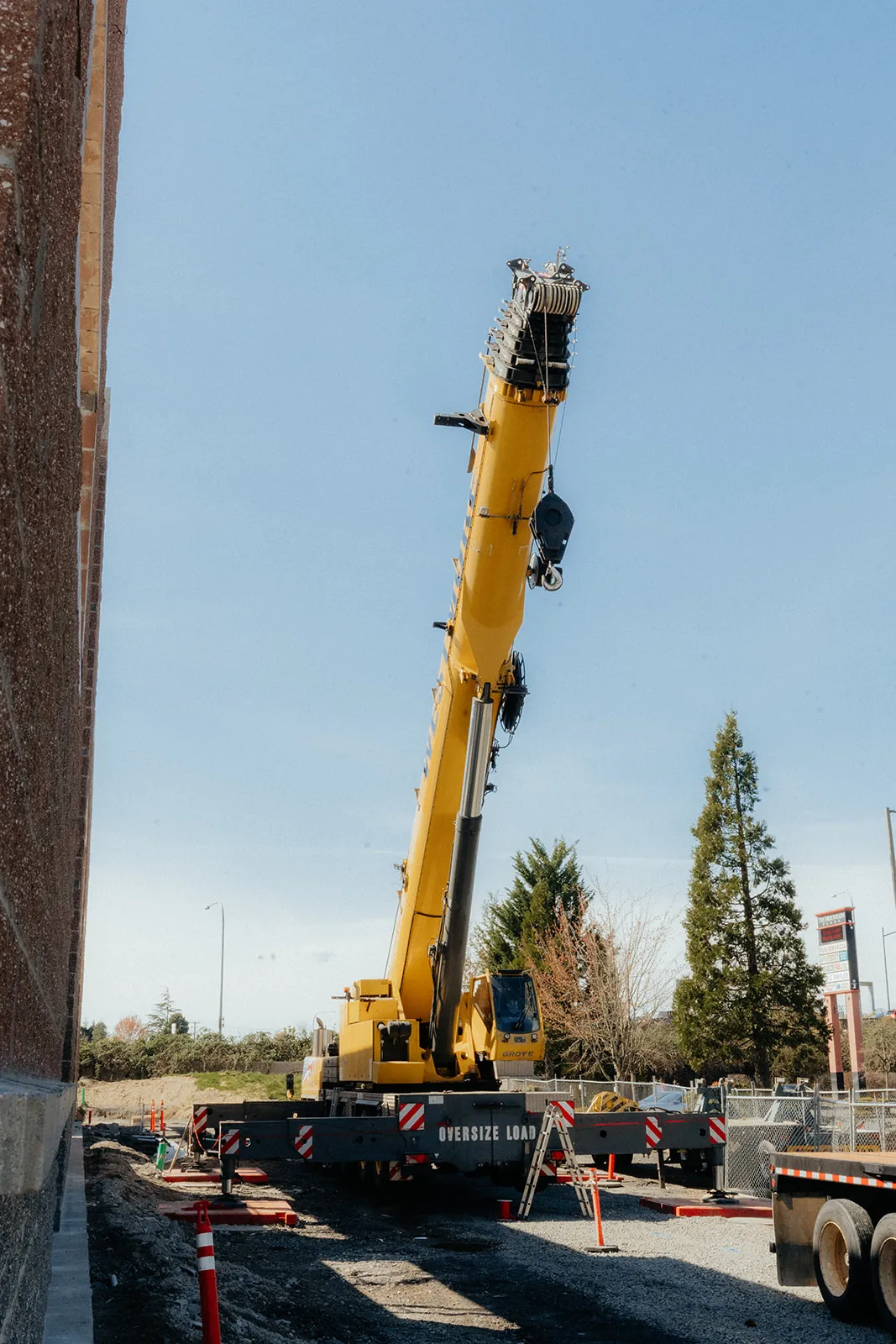
Westmore yellow Grove crane with an Oversize Load banner beside a brick building

Every Crane Travels on Westmore's Own Iron

Every crane in the fleet is a mobile machine that travels to the site under its own power. The counterweights and the rigging gear follow on Westmore's own Freightliner tractors and specialized trailers, so the machine, the gear, and the crew arrive on one schedule with no outside hauler in the chain.

A machine the size of the 350-ton Grove can trigger an oversize transport permit before it reaches the site, depending on the route and load width. Westmore pulls that permit itself instead of leaving the customer to sort out transport paperwork for a crane they did not order the trip for.

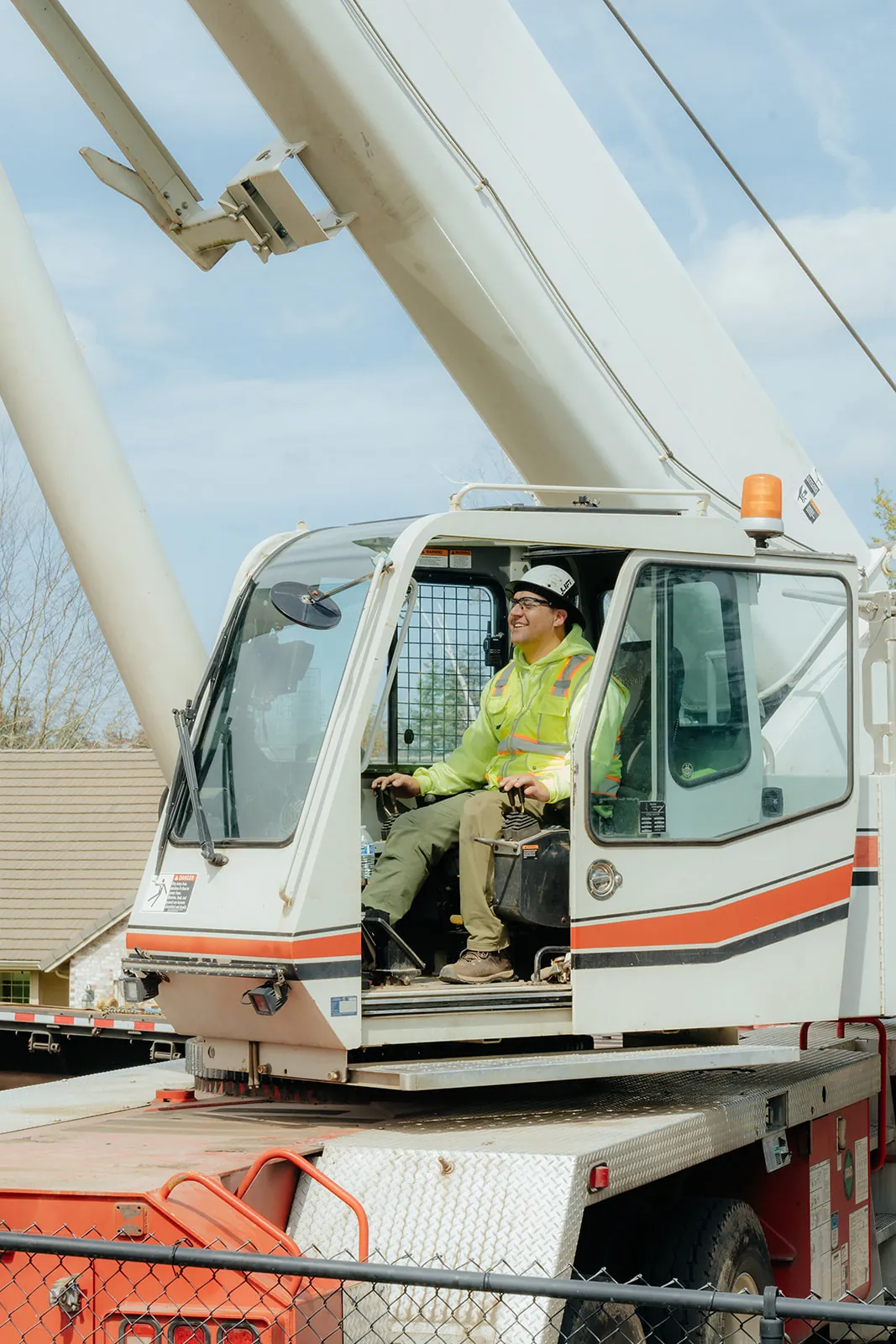
Westmore crane operator seated in the Link-Belt cab with the door open

NCCCO Certification on Every Class

All three crane classes, the 55-ton, the 100-ton Link-Belt HTC-86100, and the 350-ton Grove, run with an NCCCO certified operator assigned to that machine, not a rotating pool of drivers.

Washington's Department of Labor and Industries sets its own crane operator requirements, and Westmore meets them. Every operator across Westmore's fleet holds that certification, in Washington and in Oregon.

Not Sure Which Crane the Job Needs?

Call with the load weight, the address, and the date you have in mind, or send the basics below and we call back within 24 hours.

Reviews

5.0 Stars on Google

★★★★★

"Working with Westmore was a great experience from the first call pricing the project to when the guys finished up on site. The crane operator Travis and his helper were a pleasure to work with and very knowledgeable. Highly recommend the Westmore team for any craning needs!"

James Roberts

Google review

★★★★★

"We use Westmore Construction for all our crane needs. They are always responsive, on-time & professional. They're fast and efficient when they show up with no down time. They have multiple sized cranes and can pretty much do anything you need. We have also worked with them on the general contracting side and have no complaints. We will continue to work together."

Taylor Linge

Google review

★★★★★

"Fast to work with me when I had a short notice crane pick request for downtown Portland. Yikes. No problem for these guys. They nailed the permit, traffic, and planning submittals in no time... They were safe, they worked fast... From the big boy 350 Ton to little boy crane needs - they are our team now."

Dave Glenn

Google review

Questions We Get Every Week

Questions About the Fleet

Weight, height, and reach decide it. A load sitting close to the crane may only need the 55 ton class; the same weight out at a long radius moves the job up a class, since the load chart shrinks with distance. Where the crane can park matters as much as what the load weighs, because that distance sets the radius it has to work at.

The number is the crane's rated lifting capacity, the heaviest load it can handle under ideal conditions, and that rating drops once the boom stretches out or the load moves away from the machine. Westmore owns three: a 55 ton crane, the Link-Belt HTC-86100 at 100 tons, and a 350 ton Grove all-terrain crane. The load chart for the specific machine decides which of the three goes out.

A truck crane rides on a highway chassis and sets up on streets, driveways, and paved lots, which is what the Link-Belt HTC-86100 at 100 tons is. An all-terrain crane like the 350 ton Grove drives the road too, but carries more axles and heavier counterweight for long reaches and rough ground. Boom length, counterweight, and where the machine can stand decide which one a pick calls for.

More room than the crane takes driving in, and the spread grows with the class of machine, so a heavier crane needs a wider footprint rather than a narrower one. That spread, not the width of the crane driving in, is what limits a tight site. Pictures taken from the street and from where the machine would stand show what is really available, and the class gets checked against them.

Often, yes. The 55 ton class exists for exactly this kind of site, and a fence or a gate usually matters less than people expect, because the crane stays out front and the boom does the reaching. What rules a site out is a setup spot with no clearance overhead, or ground too soft to hold the outriggers once they are down.

Free Estimates

Tell Us About the Load

Send the load weight, lift height, and setup distance and Westmore matches the crane class before quoting the job.

(360) 772-1040

Battle Ground, WA

Request a Quote

Fields marked * are required.

We call back within 24 hours. Prefer to talk? (360) 772-1040