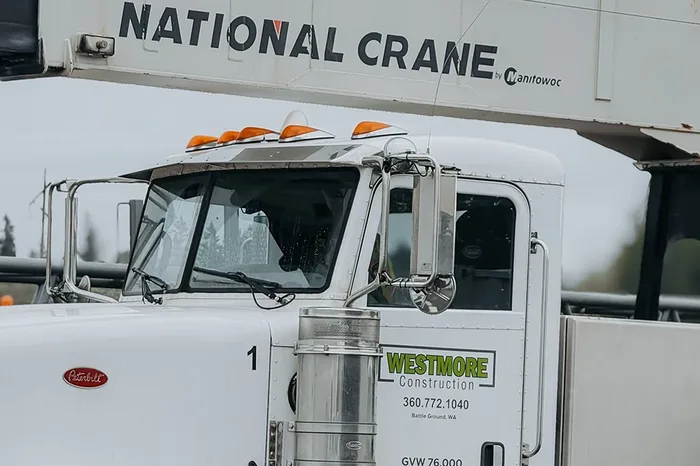

Industrial rigging, downtown rooftop units, and residential hot tub sets in Portland by NCCCO certified operators, rigging included.
Crane service in Portland is an operated service, not a machine dropped off at a gate. A job books as one unit: a crane between 55 and 350 tons, a certified operator running it, plus the slings, shackles, and spreaders that particular pick calls for. Three kinds of work fill most of the calendar in this city. Mechanical contractors book rooftop unit swaps on commercial and high-rise roofs. Industrial customers book structural steel sets, tank and vault placements, and equipment moves inside the freight districts. Homeowners book spas, hot tubs, and saunas landed in a yard no truck can back into. One fleet, one set of operators, and one company answering for the lift from the plan to the last piece.
Two questions shape the quote. First, where does the crane stand? If the answer is a street, a sidewalk, or a parking lane, the lift needs a Portland Bureau of Transportation street use permit, filed by Westmore together with the block's traffic control plan: the lanes and walks being taken, the hours they are taken for, and the signs and flaggers holding traffic around them. Lead time on that filing is what buys a specific date. Second, what is in the way? Most residential neighborhoods here still carry service lines overhead, back fences and mature trees set the boom path, and a hillside driveway in the West Hills can be too steep or too narrow for the class the weight alone would suggest. Send the load weight, how far up it has to go, how far that is from anywhere a truck can park, and two photos looking at the setup spot.
The three Portland lift types Westmore is called for most, and what changes between them.
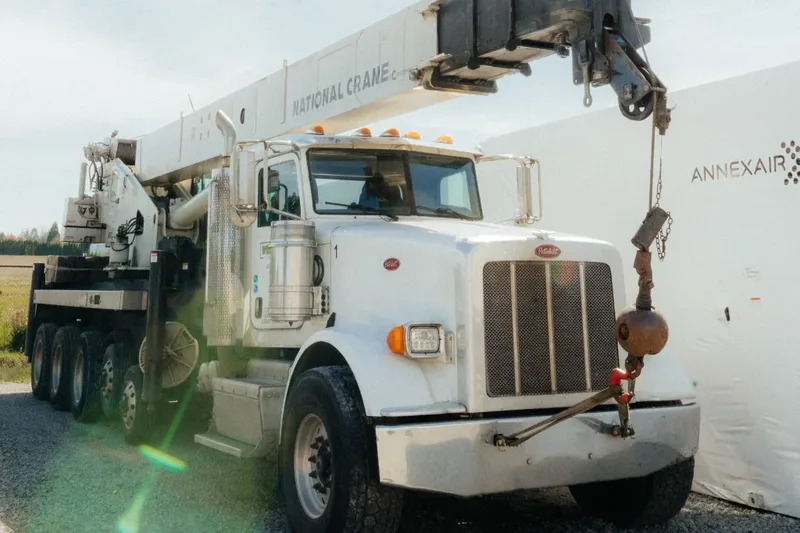
A downtown unit swap is really a street job with a lift in the middle of it, so the closure window and the pick get booked as one item.
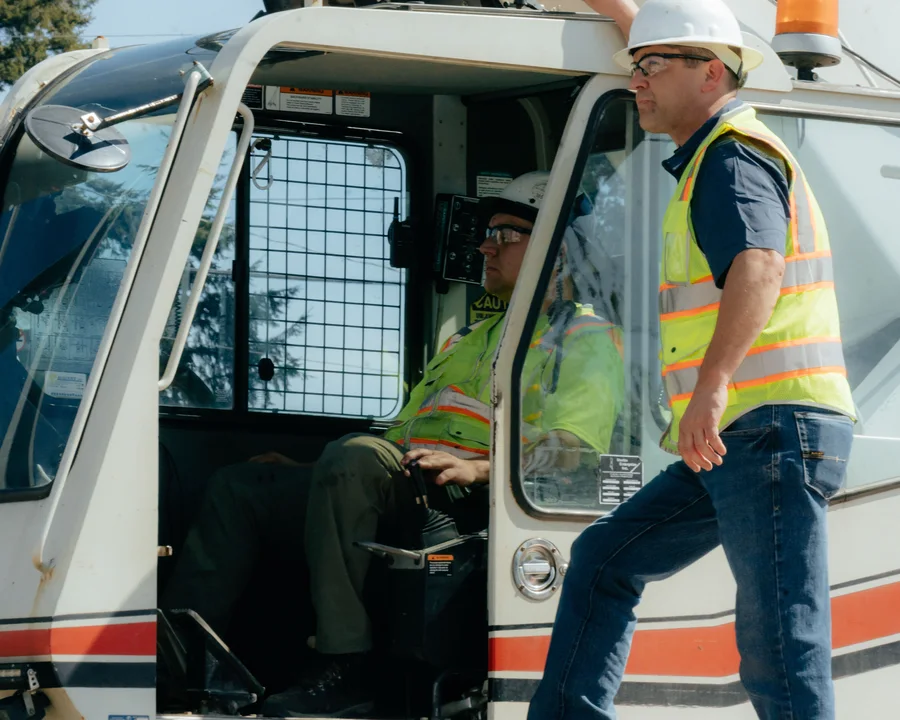
Structural steel, tanks, transformers, and machinery set inside the freight districts, where there is usually room to put the outriggers down and swing.
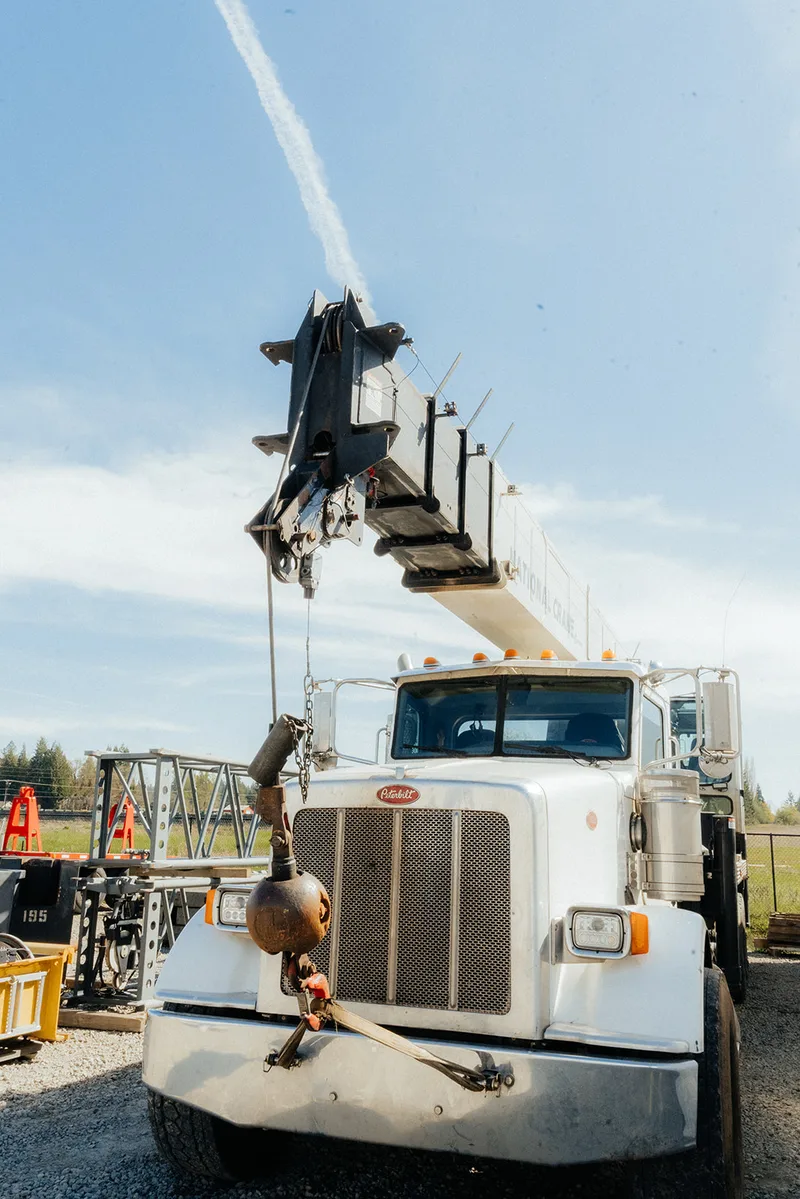
The question on a spa set is simple: can the boom clear the house from the curb? Photos answer it before a truck is booked.
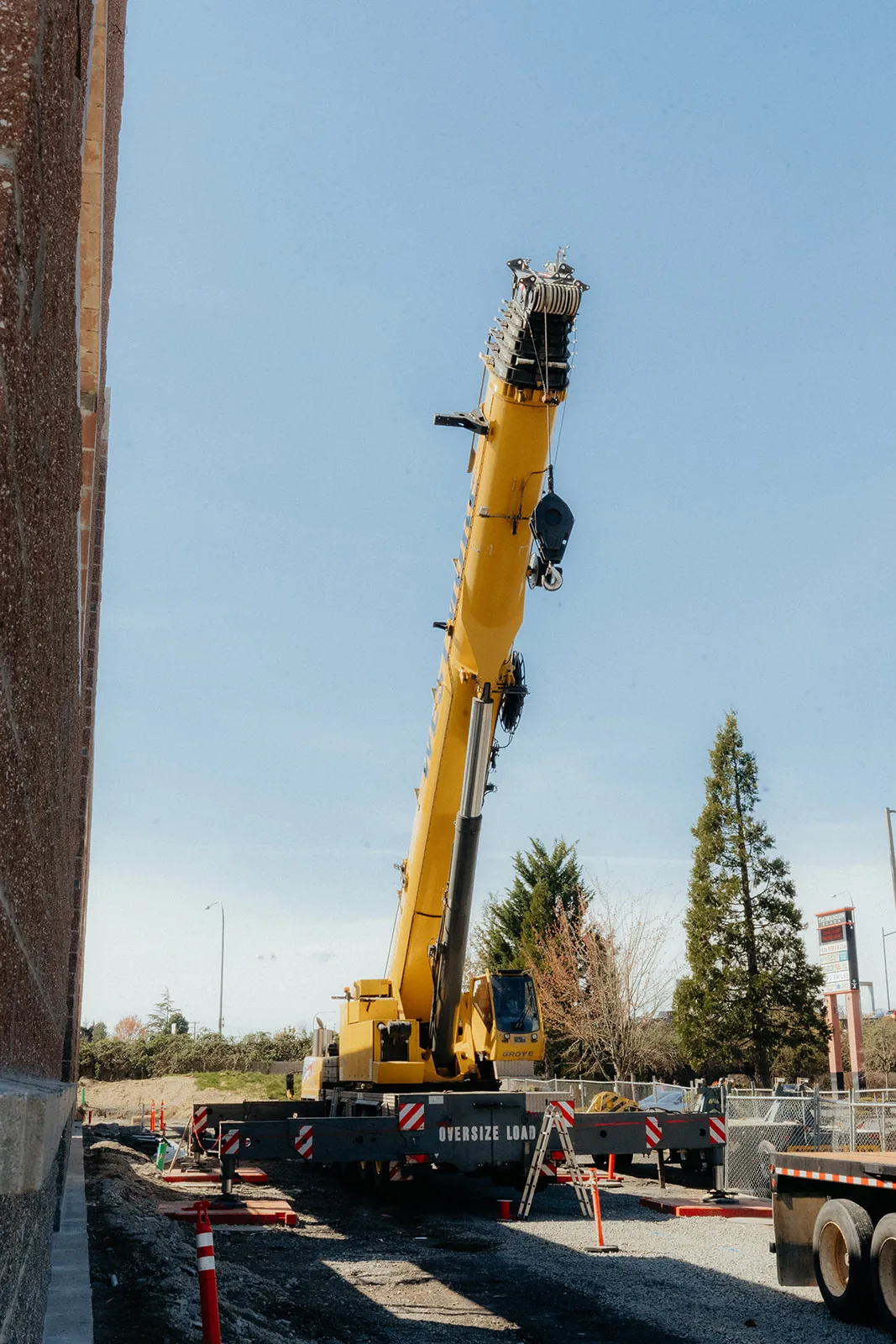
Weight is only the first input. The class Westmore sends depends as much on how far the hook has to travel out from the pin as on what hangs off it, because reach is bought with capacity. A light unit landing in the middle of a wide roof can need a bigger machine than a heavy one landing at the parapet. Hand over the weight, the roof or fence height, and how far the curb sits from the landing spot.
Setup position is the other half of it. Downtown, that position is whatever lane the permit buys. In a freight yard it is wherever the ground is firm. On a West Hills lot it is often the only level spot on the property. Pictures of that spot answer more than a description does, so send one from the street and one from where the load has to come down.
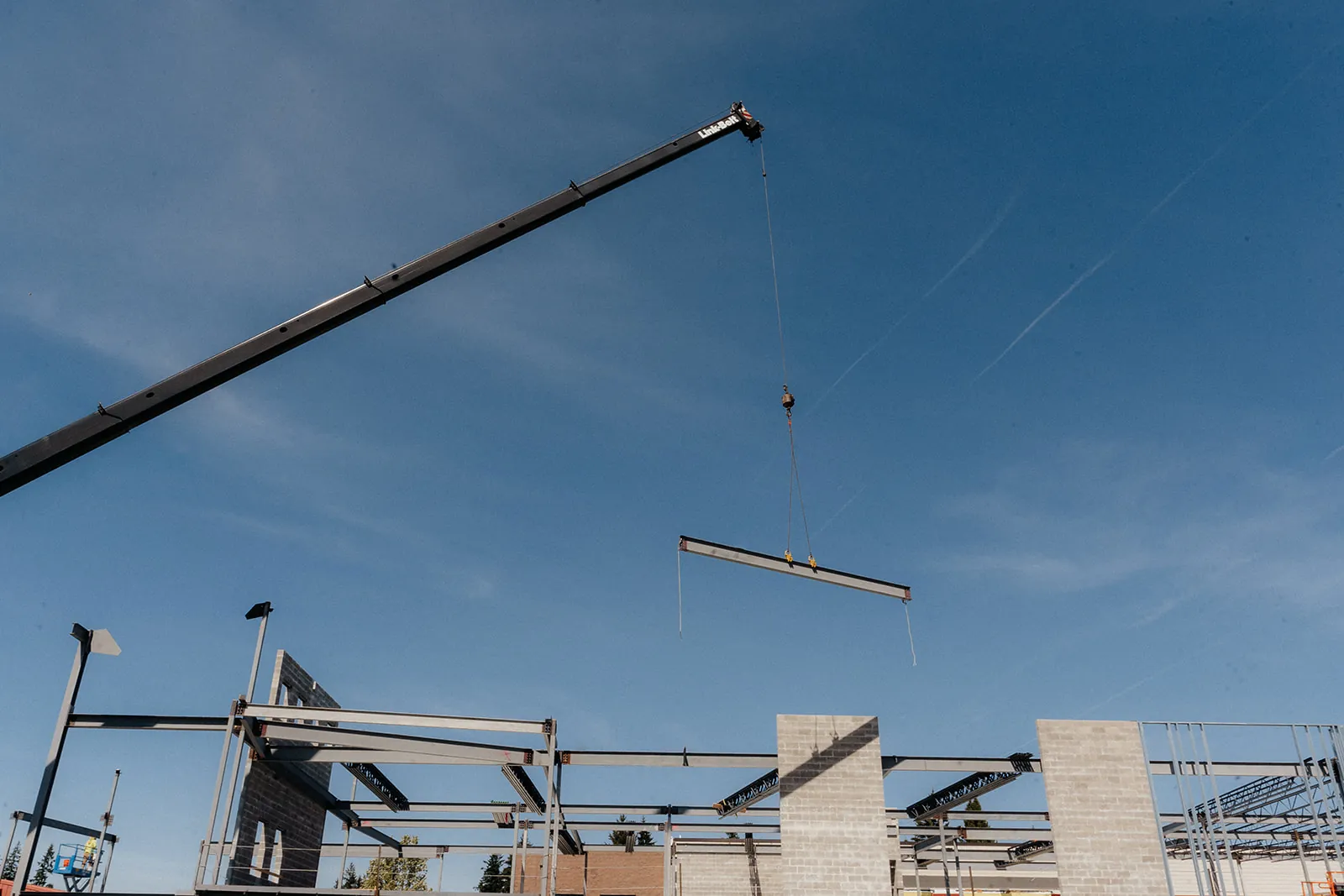
Mechanical contractors and building managers make up much of the commercial work, and the deadline usually belongs to a failed unit. A unit quits, a roof needs a replacement before the week is out, and suddenly the permit is the problem rather than the pick. That is the situation Dave Glenn describes in a Google review of a downtown Portland job: "They nailed the permit, traffic, and planning submittals in no time." Lead with the deadline when you call.
Homeowners are the other half. A hot tub set is a short job, usually curbside, and the questions never change: can the boom clear the house, what is strung overhead, and can the truck sit level on the street. Answer those three with photos and a delivery date, and the lift gets scheduled around when the tub actually shows up rather than the other way around.
Portland jobs use the whole fleet: the 55-ton class for backyard sets, the 100-ton Link-Belt for industrial steel, and the 350-ton Grove when a load runs heavy or a boom has to travel a long way out.
The right size for HVAC units, hot tubs and spas, beams, and tight residential or commercial sites where a bigger crane cannot set up.
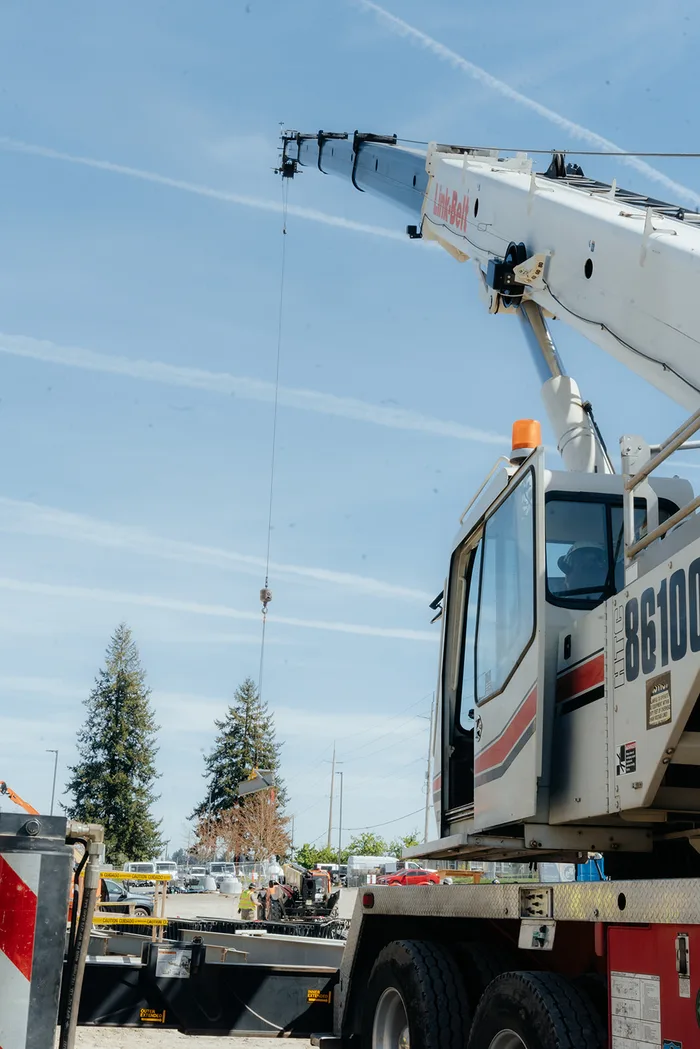
The workhorse for steel erection, precast and tilt panels, transformers, vaults, and rooftop equipment on commercial jobs.
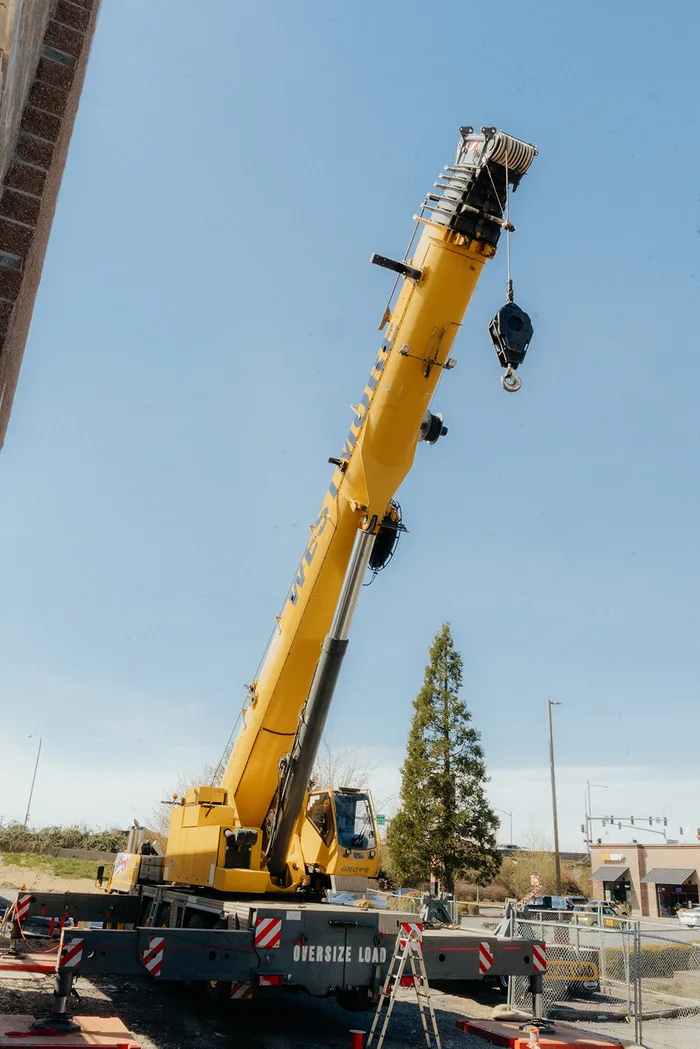
Heavy and long-reach picks: generators, large mechanical equipment, and lifts that have to clear a building from the street.
Call with the load weight, the address, and the date you have in mind, or send the basics below and we call back within 24 hours.
"Fast to work with me when I had a short notice crane pick request for downtown Portland. Yikes. No problem for these guys. They nailed the permit, traffic, and planning submittals in no time... They were safe, they worked fast... From the big boy 350 Ton to little boy crane needs - they are our team now."
Google review
"This company does excellent crane work. I've worked with several crane companies in the past and none of them showed up as prepared as Westmore. Their crew had a great attitude, communicated well, and safely set our sign bridge in under an hour. I highly recommend Westmore Construction."
Google review
"Westmore Construction is an absolute pleasure to work with. They have provided crane services for us on multiple projects. Their can-do attitude is refreshing, and they are unbelievably efficient. 10/10, would hoist again."
Google review
Usually yes, and access is the reason rather than the crane. On open industrial ground around Rivergate or the Columbia Corridor the job is the machine, the operator, and the rigging. The identical pick on a downtown block picks up a street use permit, a traffic control plan, the lead time to clear both, and a tighter setup that eats more of the day. Same load, longer day.
The unit weight and the roof height start it, then the setback finishes it. A crane that can park against the building needs less machine than one pushed back to a sidewalk or a parking lane, because rated capacity falls off at a longer radius. The Westmore fleet runs from 55 tons to 350 tons, and the class comes off the weight, the height, and the setup spot together.
No, they change the plan rather than stop the lift. City code puts underground wiring districts mainly along the I-405 loop, downtown, the Pearl District, and South Waterfront. Everywhere else in Portland, service lines run overhead, so the boom route and the setup spot get worked out around them before a date is set. Photos of the street and the yard answer most of it.
Often, but the site decides. West Hills roads are narrow and winding with steep grades, and a crane needs level ground for its outriggers before it can pick anything. A driveway that works for a delivery truck may not take a loaded crane. The approach, the grade, and the setup spot are what decide which class fits a hillside address.
Ahead of the week you want it, if the crane will sit in a street. A Temporary Street Use Permit has to be in hand before setup, and the city charges retroactive fees for right of way used without one, so the filing governs the earliest date. A pick entirely on private ground waits only on crane availability.
No. Every machine goes out as operated crane service: an NCCCO certified operator, the slings, shackles, and spreader gear the pick calls for, and the truck that brings its counterweights. Bare machines are not part of the business. On a downtown job that also keeps the permit, the traffic plan, and the lift under one company.
Level ground under the outriggers, an open swing path for the boom, and the street sorted out. Move cars, bins, and low branches out of the setup area ahead of the lift. If service lines cross the lift path, say so early. If the crane needs a lane or a parking space, that is the street use permit, plus the traffic control plan, that Westmore files.
Two numbers and one address: what it weighs, how high it goes, where it sits. The machine gets picked off that before anything is priced.
Battle Ground, WA
Fields marked * are required.
We call back within 24 hours. Prefer to talk? (360) 772-1040