
·
A crane lift needs a permit once the crane or its outriggers leave private property for a public street or right of way.
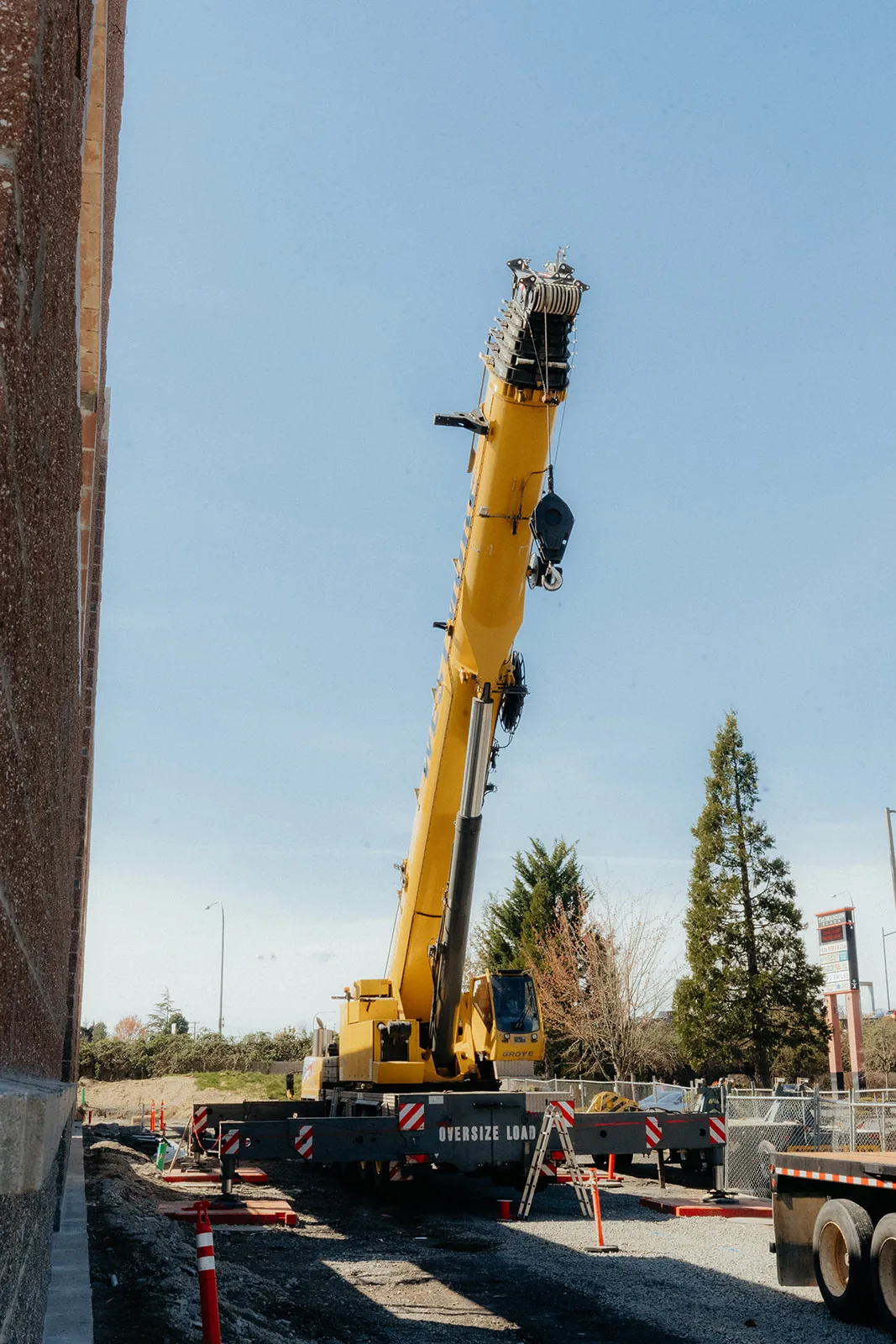
A permit for a crane lift becomes necessary once the crane moves off private property and into a public street, sidewalk, or right of way, or when the crane itself qualifies as an oversize load on the highway. Vancouver requires its own street use permit through Public Works Traffic Engineering, and Portland requires a Temporary Street Use Permit through PBOT, both triggered by the same thing: a crane or its outriggers sitting in the right of way. Moving the crane itself adds another permit for oversize loads: Oregon requires one through its ODOT ORION system for anything over 8 feet 6 inches wide, 14 feet tall, or 80,000 pounds.
A crane lift needs a permit in Vancouver or Portland once the crane, its outriggers, or its load path crosses from private property into a public street, sidewalk, or right of way. A hot tub or spa set in a fenced backyard, entirely inside the property line, typically needs no permit in either city. The moment a crane sets its pads in the street to reach that same backyard, or swings its boom over a sidewalk to get there, the job moves into permit territory, because both cities treat the right of way as public space a private company cannot occupy without approval.
The same line applies to commercial work. A rooftop HVAC unit lifted straight up from a loading dock, entirely on the building's own lot, is a different permit question than one where the crane has to park at the curb out front. Westmore checks the site plan for exactly where the crane and its outriggers will actually sit before telling a customer whether a permit applies.
Vancouver requires a street use permit from Public Works Traffic Engineering and Operations before a crane occupies any part of a public street or right of way. The city keeps an authorized contractor list, and the company applying for the permit has to already be on it. The application also needs proof of insurance naming the City of Vancouver, and it has to go in at least 24 hours before the work happens.
A job that touches an intersection or three or more travel lanes needs direct coordination with the city's Traffic Engineering staff on top of the base permit. Westmore handles the contractor list requirement, the insurance filing, and the lead time as part of the same application, so none of it becomes a separate task for the customer to track down.
Portland requires a Temporary Street Use Permit whenever a crane is placed or operated anywhere in the public right of way, filed through the Portland Bureau of Transportation's TSUP program. The application goes in online at tsup.info, and it needs sign off from the city Traffic Engineer before the crane can set up. The requirement applies the same way citywide: whether the crane is downtown or in a quieter neighborhood, placing it in the right of way brings the same TSUP program into play the moment it touches the street.
A traffic control plan is the document a permitting agency requires before a crane can close a lane, a sidewalk, or an intersection, and it lays out how vehicles and pedestrians get routed around the work. Both Vancouver and Portland require an approved plan before a crane occupies the right of way, and it gets filed alongside the permit application rather than worked out once the crane is already parked at the curb. Westmore's operators arrive on lift day with that plan already approved, so the crew sets up on schedule instead of waiting on a traffic engineer's sign off with the crane already on site.
Moving the crane can trigger its own permit before it ever reaches the site, separate from any street use or right of way permit at the job. Oregon requires an ODOT over dimension permit, filed through the state's ORION system, for any load wider than 8 feet 6 inches, taller than 14 feet, or heavier than 80,000 pounds, and that threshold covers a fully rigged crane traveling on state highways like I-5 into Portland. Washington applies its own oversize load rules through WSDOT on state routes, though the specific thresholds work through a separate state process from Oregon's.
The 350-ton Grove that handles Westmore's heaviest picks falls under that Oregon threshold on its own, well before it reaches the jobsite. That permit gets filed for the drive, on top of whatever street use or TSUP permit applies once the crane arrives and sets up.
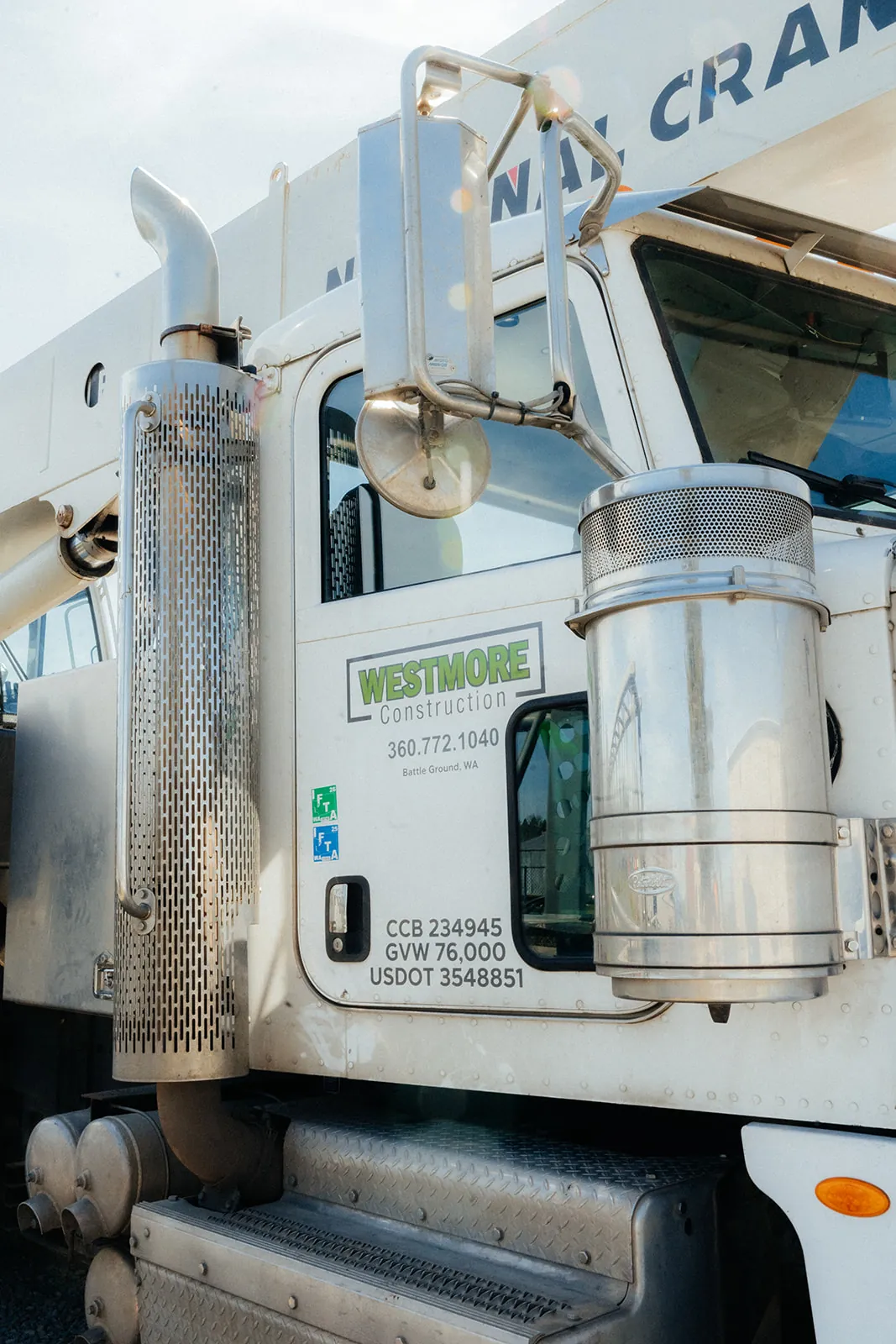
Westmore files the crane permit, not the property owner or their commercial general contractor. The company holds an active Washington contractor license, WESTMCL836OJ, and an active Oregon CCB license, 234945, and lists itself as the contractor of record on the application in whichever jurisdiction governs the site. Every operator running the crane also carries NCCCO certification, which satisfies Washington's L&I requirement for the person at the controls, so the same paperwork that clears the crane to occupy the street also covers who is allowed to operate it once it is there.
The permit programs in the two cities share a purpose but not a name.
| City | Permitting Authority | Program | What Triggers It |
|---|---|---|---|
| Vancouver, WA | Public Works, Traffic Engineering and Operations | Street Use / Right of Way Permit | Crane or outriggers in a public street; authorized contractor list, proof of insurance, at least 24 hours notice |
| Portland, OR | Portland Bureau of Transportation | Temporary Street Use Permit (TSUP) | Crane placed or operated anywhere in the right of way; filed at tsup.info |
Review time varies by jurisdiction, and a route that crosses a state highway can add ODOT or WSDOT to the mix on top of whichever city is involved. Westmore checks the jurisdiction and the route before setting a lift date, rather than assuming a permit clears on the first pass.
Usually not. A pick contained within the property boundary, outriggers and boom path included, typically needs no city permit in Vancouver or Portland. The moment a machine sets its pads on the street to reach that same backyard, or swings a load above a public sidewalk, the job enters permit territory. The site plan settles it, not the item being lifted.
The jurisdiction sets that, not the crane company. Vancouver takes a straightforward street use application with one day of lead time, and work reaching an intersection or several travel lanes calls for direct coordination with city traffic engineers first. Portland routes its Temporary Street Use Permit past the city Traffic Engineer before setup. A state highway route can pull in ODOT or WSDOT too.
No, Westmore applies. The company lists itself as contractor of record wherever the site sits, licensed under WESTMCL836OJ on the Washington side and CCB 234945 on the Oregon side. Vancouver also asks for proof of insurance that names the city, and that goes in with the same application rather than as a separate step.
Whenever the setup shuts down part of a street, a walkway, or an intersection. The plan is the document showing how drivers and pedestrians get routed around the machine. Portland requires the traffic control plan approved alongside its Temporary Street Use Permit. Vancouver handles a closure at an intersection, or one taking three or more lanes, through direct coordination with its Traffic Engineering staff.
Often, and separately from anything filed at the jobsite. Oregon runs over dimension permits through the ODOT ORION system, and the thresholds start at 8 feet 6 inches of width, 14 feet of height, or 80,000 pounds. A rigged crane on a state highway can meet any of those. Washington handles oversize moves through WSDOT. The 350 ton Grove clears that line on its own.
Send the site address and the date, and Westmore checks which Vancouver, Portland, or state permits the job needs before quoting it.