
·
Crane size is decided by three numbers: load weight, lift height, and how far back the crane has to sit from the load.
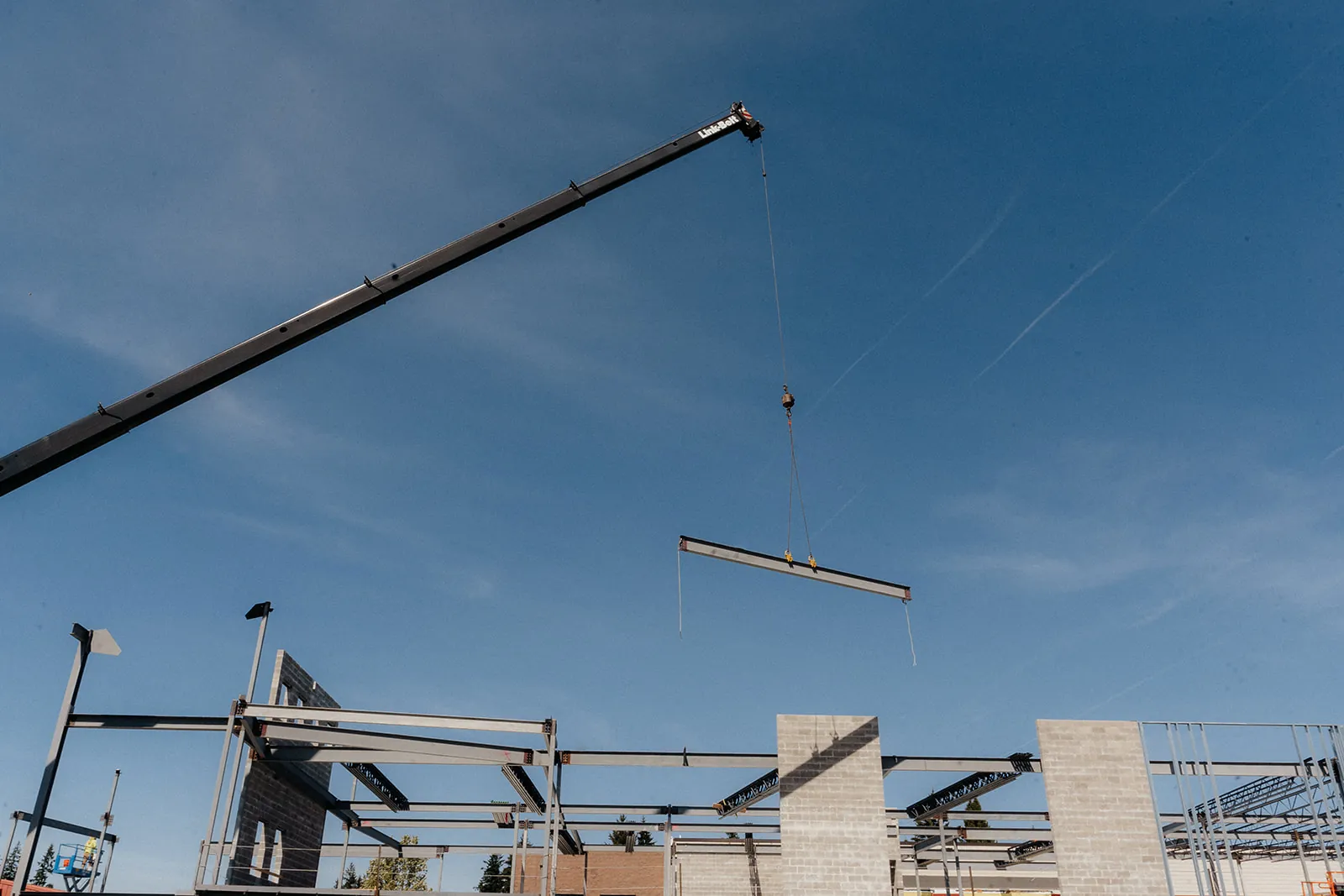
Crane size is decided by three numbers: how much the load weighs, how high it has to travel, and how far back the crane has to sit from it. A load chart, not the tonnage printed on the machine, sets what a crane can actually lift once that radius and height are worked in. Fleets built in classes, 55, 100, and 350 tons among them, cover different combinations of those three numbers rather than one crane trying to do it all.
Three numbers decide crane size on every job: how much the load weighs, how high it needs to travel, and how far back the crane has to set up from it. That third number, the setup distance or radius, is the one people leave out when they picture "a big crane" and "a small crane." A driveway that keeps the crane well back from the load asks more of the machine than the same weight lifted from right beside it.
Westmore starts every quote with those three numbers instead of a tonnage guess. A crane rated at 100 tons on paper does not lift 100 tons at every radius and every height. It lifts a number that drops the farther the boom reaches and the higher it climbs. Get the three numbers right and the right class of crane follows.
| Number | What It Controls |
|---|---|
| Load weight | The base figure a crane's rated capacity has to cover |
| Setup distance (radius) | How far the boom's tip sits from the crane once it is rigged and set up |
| Lift height | How far the boom has to extend or raise to clear the target |
A load chart cares about radius first because a crane's rated capacity is really a family of numbers, one for every combination of boom length and angle, not a single figure printed on the side of the machine. Set the outriggers closer to the load and the safe capacity at that radius goes up. Set them farther back and it drops, and the drop is steep, not gradual.
That is why two jobs with the same weight can call for two different crane classes. A rooftop HVAC unit set from a parking lot beside the building needs less crane than the same unit set from a lot on the far side of the street, even though the unit itself never changes.
Lift height changes the answer because it stacks on top of radius instead of replacing it. Getting the load higher usually means extending or raising the boom, and a longer or steeper boom reaches the load at a longer radius even when the crane has not moved an inch closer or farther away.
A hot tub set into a backyard at ground level and a rooftop unit set on a tall commercial roof can weigh close to the same amount and still need different crane classes, because the rooftop pick is really asking the boom to solve for height and radius at the same time.
Site access and ground conditions both limit crane size, because a bigger crane needs more room to set up and firmer ground under its outriggers, not less. Outriggers spread wider as tonnage goes up, so the 350-ton class needs a footprint that a narrow driveway or a fenced side yard cannot offer, regardless of how light the actual load is.
Ground conditions matter just as much. Soft soil, a sloped yard, or a driveway that was never poured to hold outrigger loads can turn a routine pick into one that needs the crane's setup shifted to firmer ground, or its position changed to spread the load differently. Westmore checks the ground and the access before it checks the load chart, because either one can change the answer on its own.
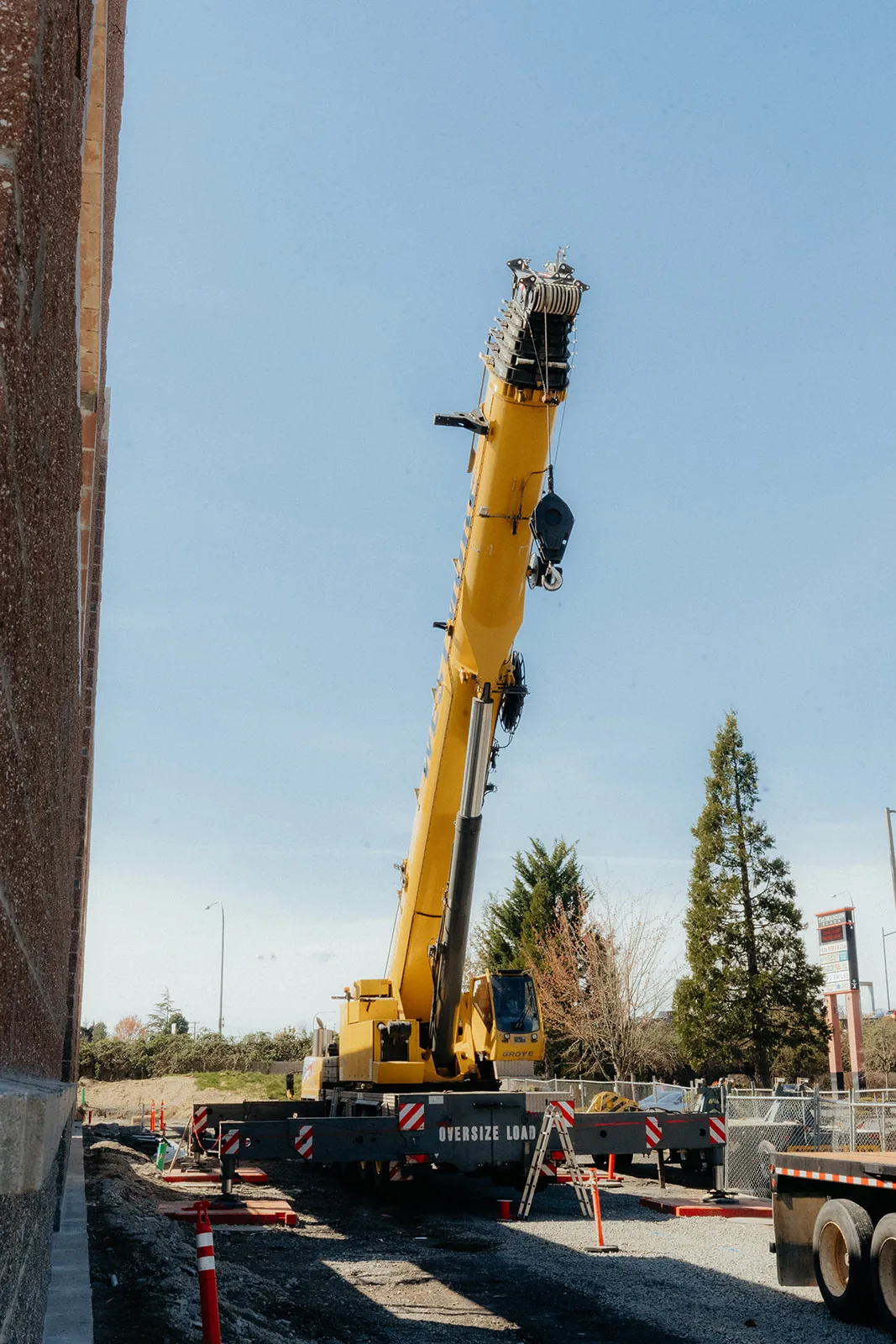
Westmore's fleet covers three tonnage classes, 55, 100, and 350 tons, and each one tends to land on a different kind of job once the three numbers are worked out. The 55-ton class usually covers tighter sites and lighter loads, hot tubs, spas, and beams set from driveways or backyards where a bigger machine could not set up in the first place. The 100-ton class gets reached for most often on commercial sites, rooftop equipment, structural steel, and tilt-up panels where the radius and height sit in a middle range. The 350-ton class comes out for the heaviest and longest-reach picks, generators, large mechanical equipment, and any lift that has to clear a building from the street instead of the lot beside it.
None of the three classes go out without an NCCCO certified operator and rigging crew assigned to it, since Westmore treats the crane and the operator as one package rather than a machine for hire on its own. The full spec on each class, including what each is built for, is on the fleet page.
An online crane size calculator can only get close, because it works from a generic chart and a rough weight, not the specific machine on the specific site. It can rule out an obviously wrong answer, tell a homeowner that a hot tub probably will not need the largest crane on a fleet, but it cannot check a driveway's outrigger footprint, the soil underneath it, or how far the crane will actually have to sit back once it arrives.
A real load chart is tied to one crane's actual specifications at one radius and one boom angle, checked against the actual site. That is the number Westmore works from once a job gets a call instead of a guess.
Have the load's weight, its rough dimensions, and where the rigging can attach ready before you call, along with how high it needs to travel and how far back the crane will likely have to park from it. A few photos of the driveway, yard, or jobsite fill in the access and ground questions faster than a phone description can.
Westmore uses those numbers to size the crane class before quoting the job, then sends the crane, the certified operator, and the rigging together. For a job with a longer reach or a heavier load, the same information feeds into a full lift plan before the date gets set.
The tonnage on the machine is its rating at a short radius, not a figure it holds everywhere. Rated capacity is really a family of numbers, one for every combination of boom length and angle, and it drops steeply the farther and higher the boom works. The chart for that exact make and model is what a job gets sized against.
No, because setup distance changes the answer. A rooftop unit set from a lot beside the building asks less of a machine than the same unit set from across the street, and neither the unit nor its weight changed. A driveway that keeps the crane well back asks more of it than lifting from right alongside the load does.
No, it is often the wrong one. Outrigger footprints widen as tonnage goes up, so the 350 ton class needs more room to set up than the 55 ton class, not less. A cramped driveway or a fenced side yard usually points to the smaller machine even when the load by itself would tempt someone toward a bigger one.
It can only get close, since it works from a generic chart and a rough weight instead of a specific machine on a specific site. It might rule out an obviously wrong answer. What it cannot do is check the outrigger footprint a driveway offers, the soil under it, or how far back the crane will really have to park once it arrives.
The outriggers carry the whole setup, not the wheels, so pressure lands on a few pads instead of the full footprint of the machine. Loose ground, a slope, or a slab poured for cars rather than crane pads can shift where the machine sets up or send it to firmer footing. Access and ground get checked before the load chart does.
Send those three numbers and a few site photos, and Westmore matches the crane class before quoting the job.