
·
Crane service cost is set by the crane class, the mobilization, permits and traffic control, and how easily the crane can get to the load.
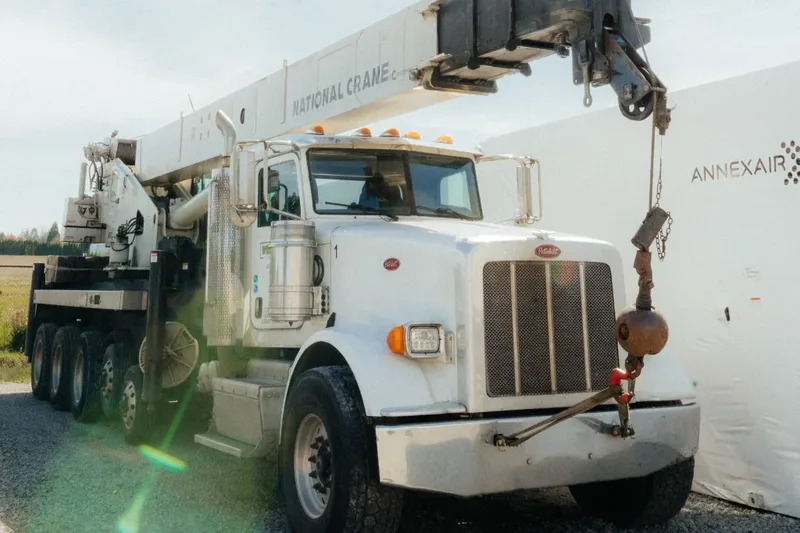
Crane service cost is set by the crane class a job needs, getting that machine and its crew to the site, whether permits or traffic control apply, and how easily the crane can reach the load. Every quote already bundles a certified operator and the rigging gear with the crane itself, since bare equipment is never rented out on its own. The fleet runs from 55 to 350 tons, and a price only gets set once the load, the lift height, and the site have been described.
Yes. A heavier or longer reaching pick calls for a bigger crane, and the class assigned to the job is one of the biggest factors in what it costs to run. Westmore’s fleet covers three classes: a 55 ton truck crane, the 100 ton Link-Belt HTC-86100, and a 350 ton Grove all terrain crane, and the class gets matched to two numbers before anything else, how much the load weighs and how high it has to travel. A backyard hot tub and a rooftop HVAC unit rarely need the same machine, and neither does a structural steel beam going up three stories, so the first question on any call is what is being lifted and where it is headed.
Four things move the number further than anything else: the class of crane the pick demands, getting that machine and its crew to the jobsite, whether the setup triggers a permit or a traffic control plan, and how much time the crane spends set up once it is there. Time matters because a crane earns nothing while it rigs down and rigs back up, so a job needing two setups to reach two loads takes more of it than one that reaches both from a single position. A 350 ton Grove is a heavier machine to move, assemble, and counterweight than a 55 ton truck crane, which is why the class question comes before every other one.
It does. Getting the crane, its counterweights, and its crew to the jobsite is part of every quote, not a separate charge billed after the fact. Every crane in the fleet is mobile and drives to the site under its own power, and the counterweights and rigging follow on Westmore’s own Freightliner trucks and trailers with no third party hauler involved, so the machine, the rigging, and the operator all arrive on one schedule and none of it gets coordinated through a middleman. Sites in Washington and in Oregon are quoted the same way, and a location outside the usual run is a scheduling conversation rather than a refusal. Where an over legal move is involved, the ODOT or WSDOT permit for it is part of the same plan.
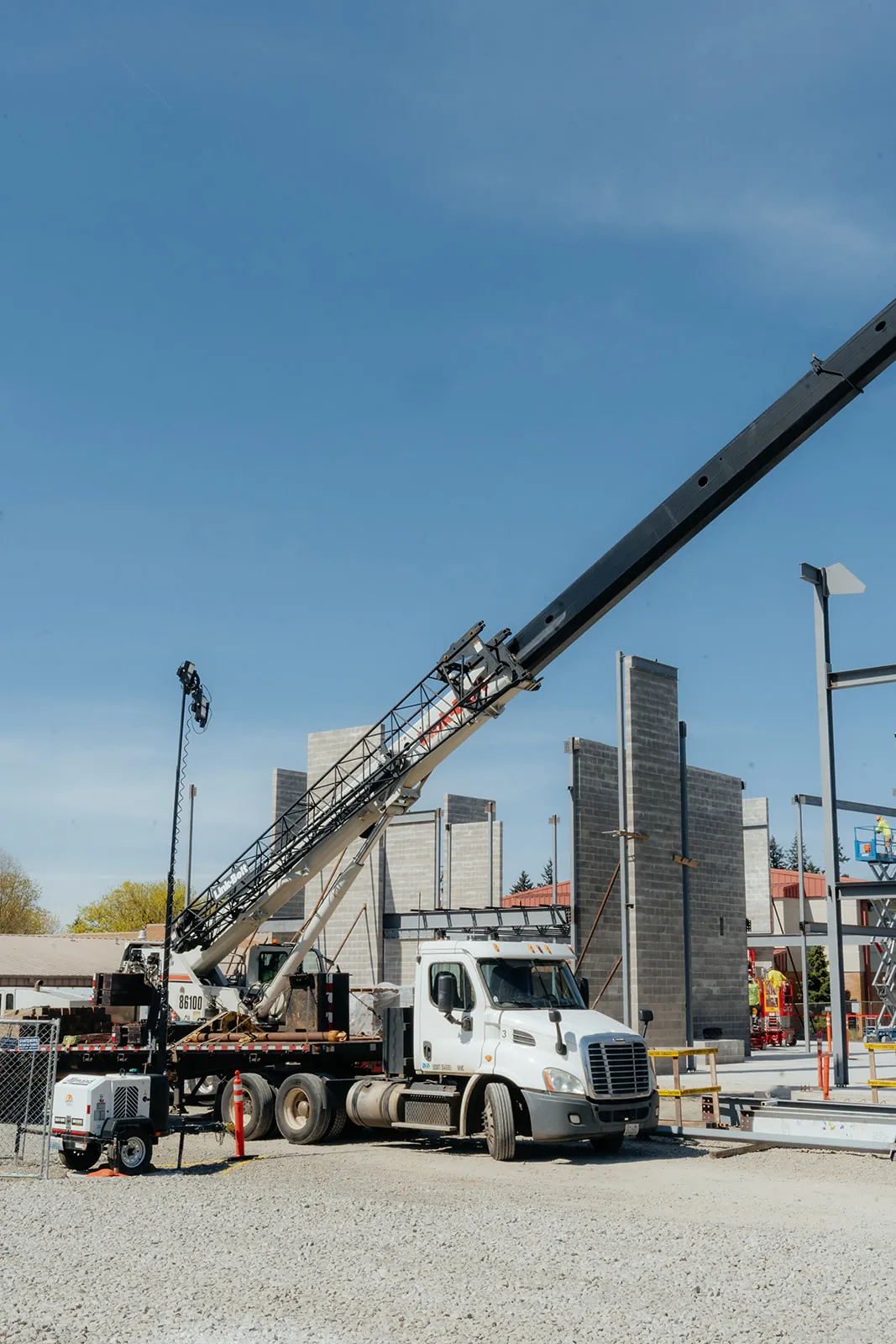
Sometimes. A lift that stays on private property, like a hot tub set in a fenced backyard, usually needs no permit at all, while one that reaches into a public street brings a filing into the job. Vancouver issues its own street use permits through Public Works, Portland requires a Temporary Street Use Permit through PBOT, and work on unincorporated roads goes through Clark County Public Works instead, three different offices depending on where the crane sets its outriggers. Oregon separately requires an over-dimension permit through ODOT’s ORION system when the truck moving the crane counts as an oversize load, and Washington runs a comparable process through WSDOT on state routes. Either one can also call for a traffic control plan before the crane occupies a lane, a sidewalk, or an intersection. Westmore applies for whichever permit fits and lists itself as the contractor of record, so the paperwork never falls back on the customer.
Yes. Every quote already includes a certified operator and the rigging gear needed for the pick, since every Westmore crane arrives with its crew. The operator assigned to a job holds NCCCO certification and meets Washington’s Department of Labor and Industries requirements for crane operators, on top of the license the company itself carries, WESTMCL836OJ in Washington and CCB 234945 in Oregon. None of that shows up as a separate line item, because a crane without a certified operator and the right rigging is not a job Westmore will run.
It can. How close a crane can physically get to the load decides where its outriggers set up and how much of its reach the pick actually uses, and both change what the job takes to run. A narrow driveway, a fenced backyard, or a tight urban lot can push a job toward a smaller class simply because there is nowhere for a bigger crane’s outriggers to go, while an open commercial site can sometimes take a larger crane parked farther back instead. Neither outcome makes the job simpler by default, since a tight site can add setup time even as it allows a smaller crane class. Describing the site, not just the load, is part of getting an accurate answer.
An accurate price starts with a handful of basics: the jobsite address, what the load weighs, how high it needs to travel, and the date the lift needs to happen. A few photos of the site, the driveway, the yard, or the loading area, help just as much as a description does, since they show the access a crane would actually have to work with. Once that is in hand, Westmore checks whether the location calls for a permit, matches the load against the fleet, and calls back with the crane class and the price for the job.
Send this before the call:
Yes, and it is usually the biggest single factor. A larger class means a heavier machine to move onto the site, more counterweight to haul, and more setup time before the first pick, so the class a job requires moves the number more than the load weight does on its own. That class is set by the machine's load chart at the working radius, not by its headline tonnage.
Included, always. A certified operator comes with the machine, and so does the rigging for the pick, because all three leave together. That operator holds NCCCO certification and satisfies Washington Labor and Industries rules covering whoever runs the controls. Westmore does not put a crane on a job without one of its own certified operators running it, so there is nothing to arrange separately.
Reach, not weight. A roof pick makes the boom answer for elevation and radius together, which can move the work into a larger class than a backyard set of identical weight needs. That job is also likelier to park the machine at the curb, and a curb setup drags along a street use permit plus a routing plan for traffic around it.
Only when the setup leaves private property. A hot tub dropped inside a fenced backyard usually needs no filing at all, while a machine reaching in from a public street does. Vancouver handles those approvals at Public Works, Portland requires its PBOT temporary street use filing, and unincorporated roads run through Clark County. Westmore is the applicant on those filings, not the property owner.
The jobsite address, the load weight, how high or how far it must travel, and the target date. Pictures of the drive, the yard, or the loading area show access that words cannot. From there the location gets checked for a permit, the load gets matched against the fleet, and the class and the number come back on the same call.
Send the jobsite address, the load, and the date, and Westmore calls back with the crane class and the price for the job.