
Steel buildings framed, erected, and closed in for Olympia, Tumwater, and Lacey owners, with the setting crane on the same crew.
Steel buildings in Olympia, Washington means pre-engineered metal buildings taken from frame to finished exterior for owners in Olympia, Tumwater, and Lacey, carried on Washington license WESTMCL836OJ. Westmore performs the work rather than brokering it: one crew raises the columns and beams, sets the roof and wall panels, hangs the doors and glazing, and hands over a weathertight building. The machines that lift the steel and the NCCCO certified operators running them belong to Westmore, so a frame never waits on a rental to free up. Owners can buy that scope by itself or turn over the whole project.
Two permits run in parallel and they are not the same thing. The building itself is reviewed under commercial building code by the jurisdiction the address sits in, while a crane or a delivery truck working from a public street needs a separate right-of-way or street-use permit; a build that keeps every machine on private ground only needs the first. On site, the slab and the bolt pattern set into it have to agree with the steel supplier's engineered plans, verified before anything is loaded onto a truck. Weather shapes the order of work here too, since the rain arrives in November and stays. Send drawings if the design is that far along, or a footprint plus the intended use and which of the three cities the parcel sits in.
Four scopes an Olympia, Tumwater, or Lacey owner can buy, from a bare frame to a finished, occupiable building.
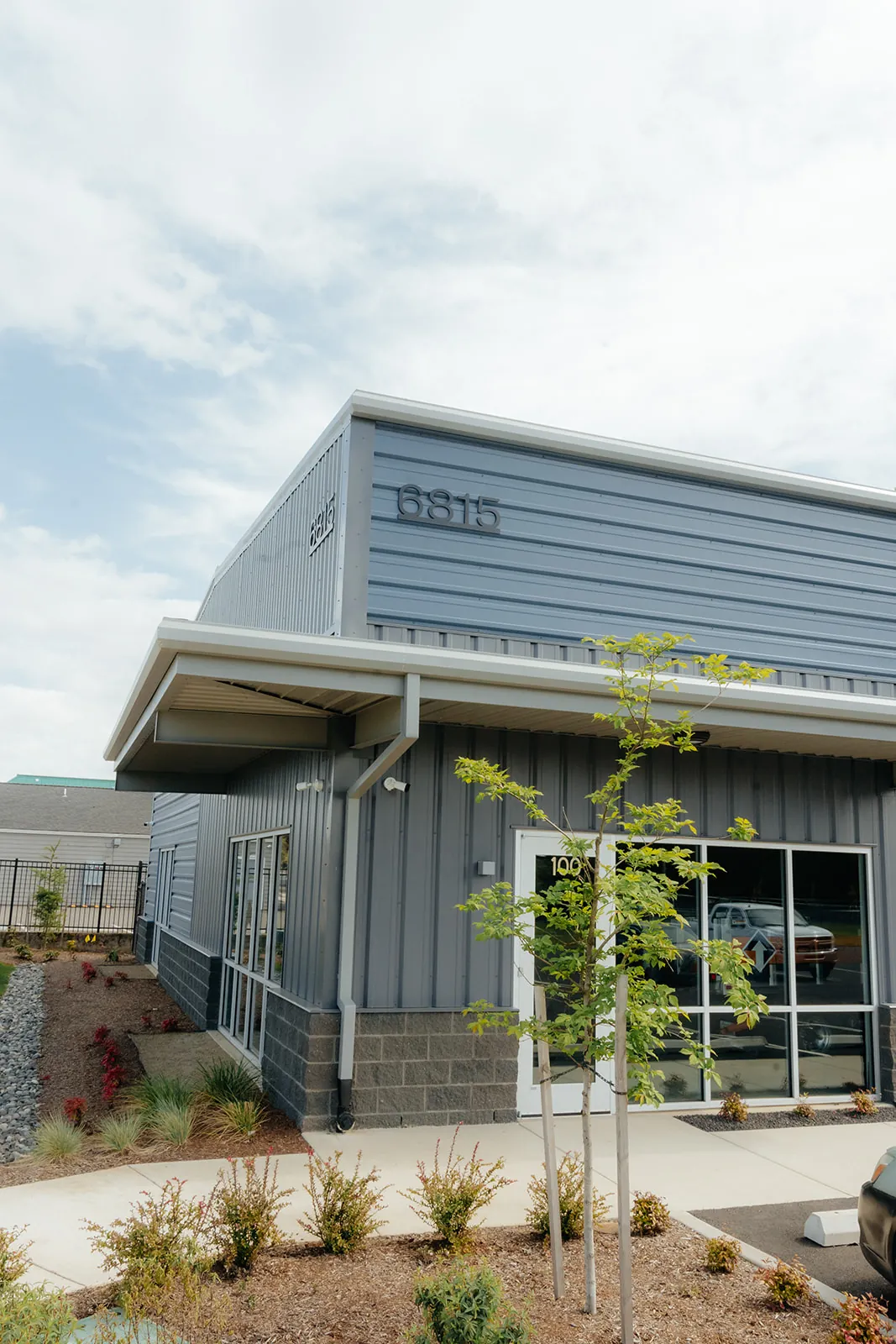
A manufacturer-engineered frame ordered to the clear span and eave height the operation actually needs, not a catalog size.
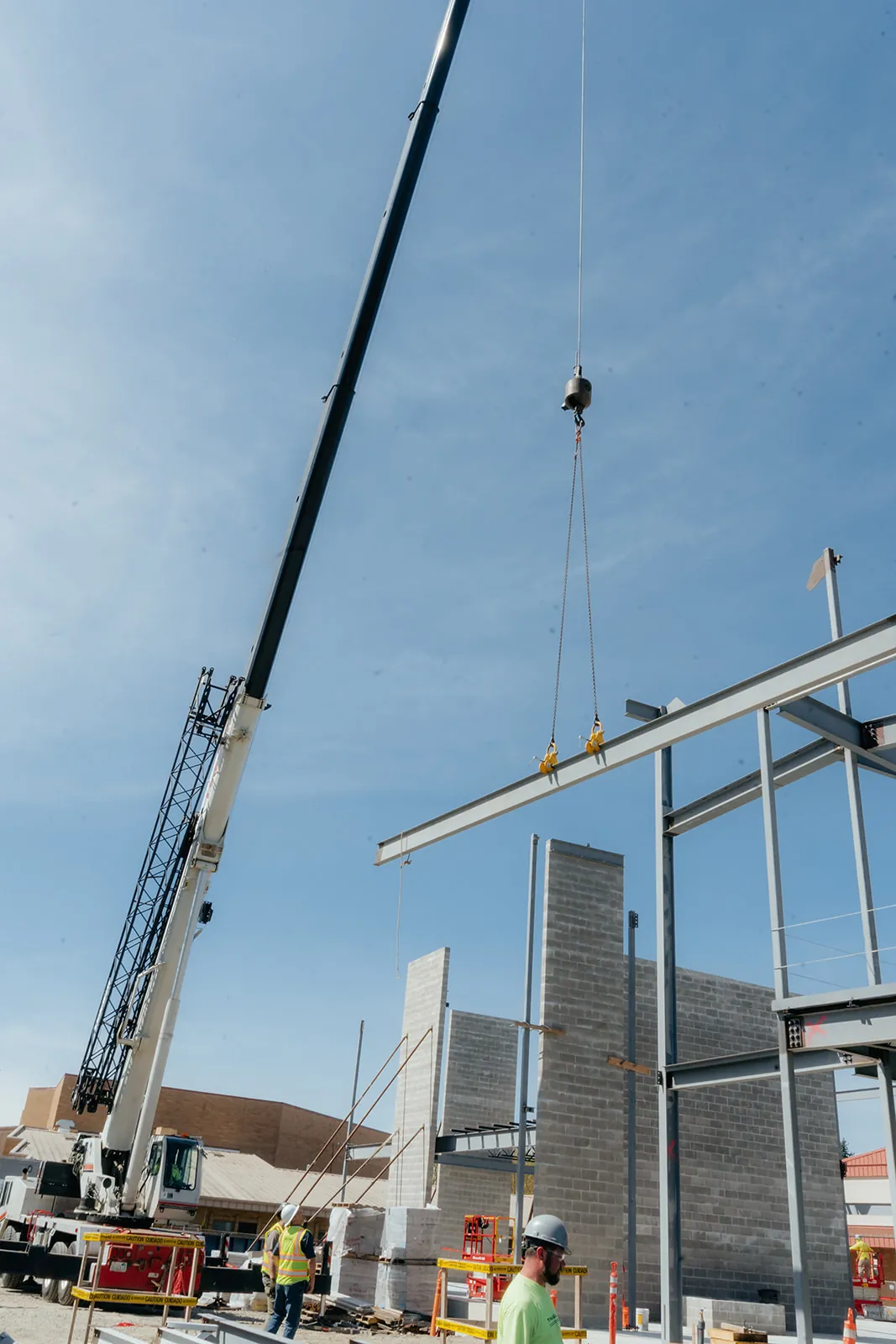
Columns, beams, and joists raised and bolted up on an existing contractor's schedule, crane and operator included in the scope.
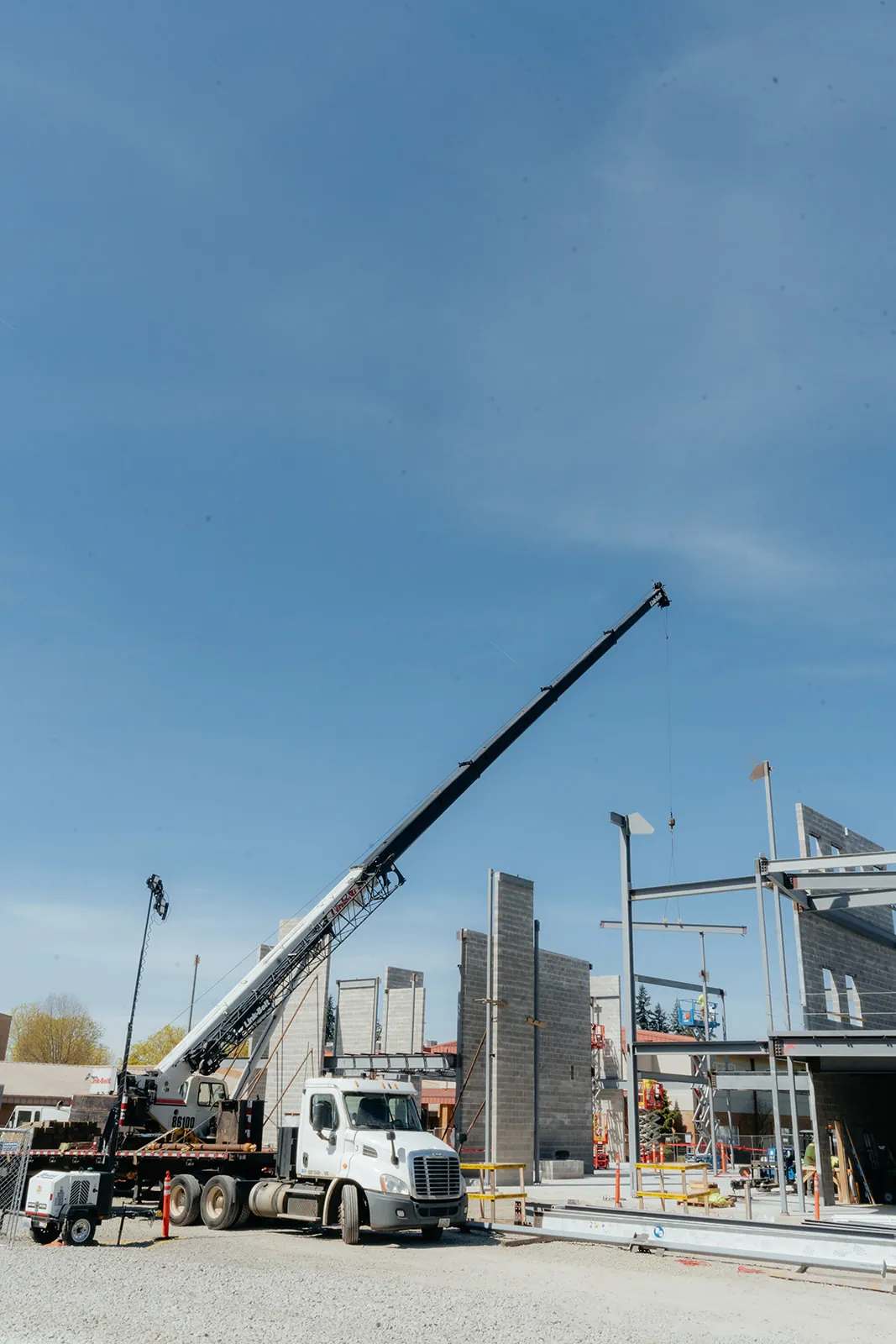
Large-footprint shells built around dock doors, trailer circulation, and the yard traffic the building has to live with.
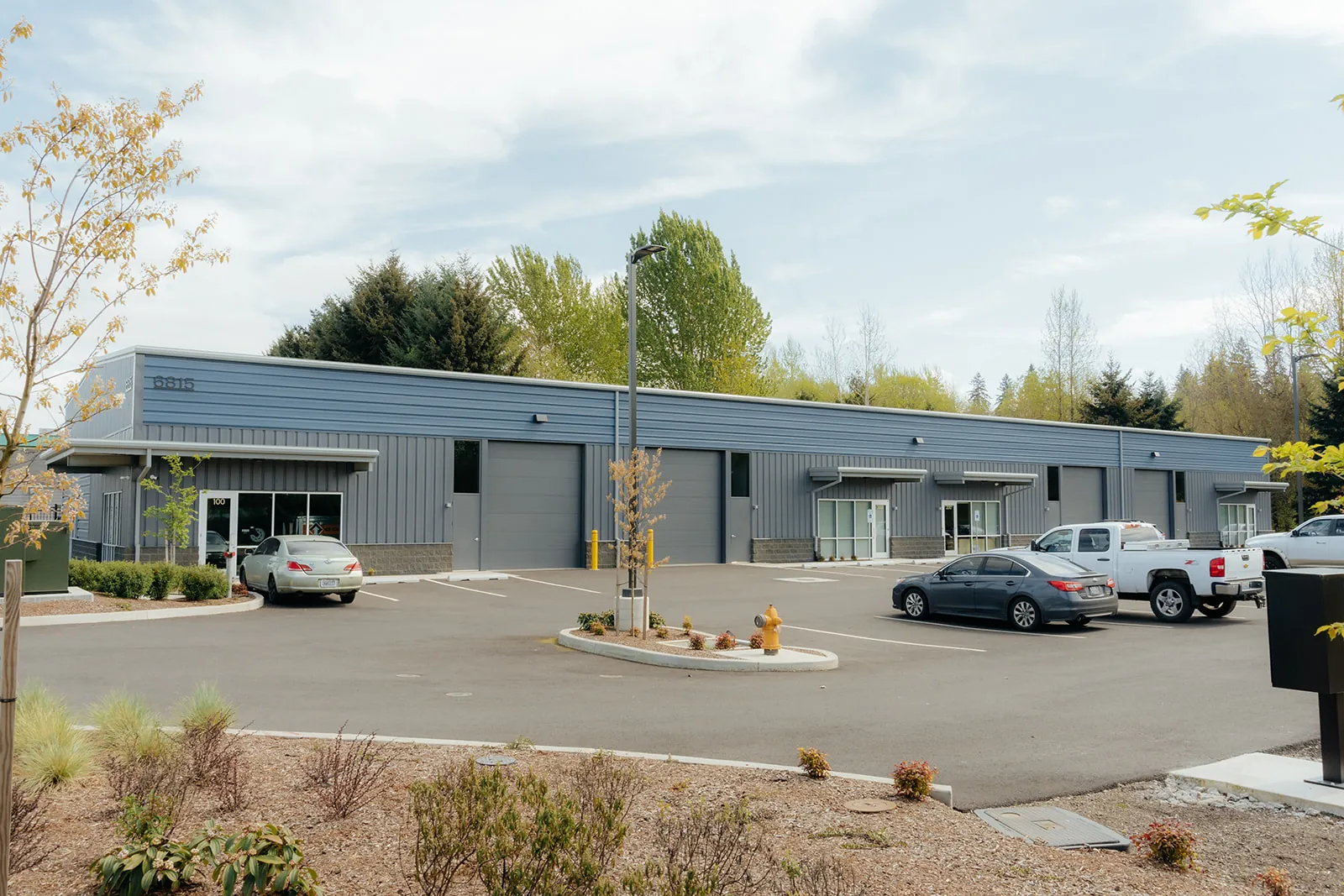
Siding, panels, doors, and glazing carried through by the erection crew, so no second contractor is hired to close the shell.
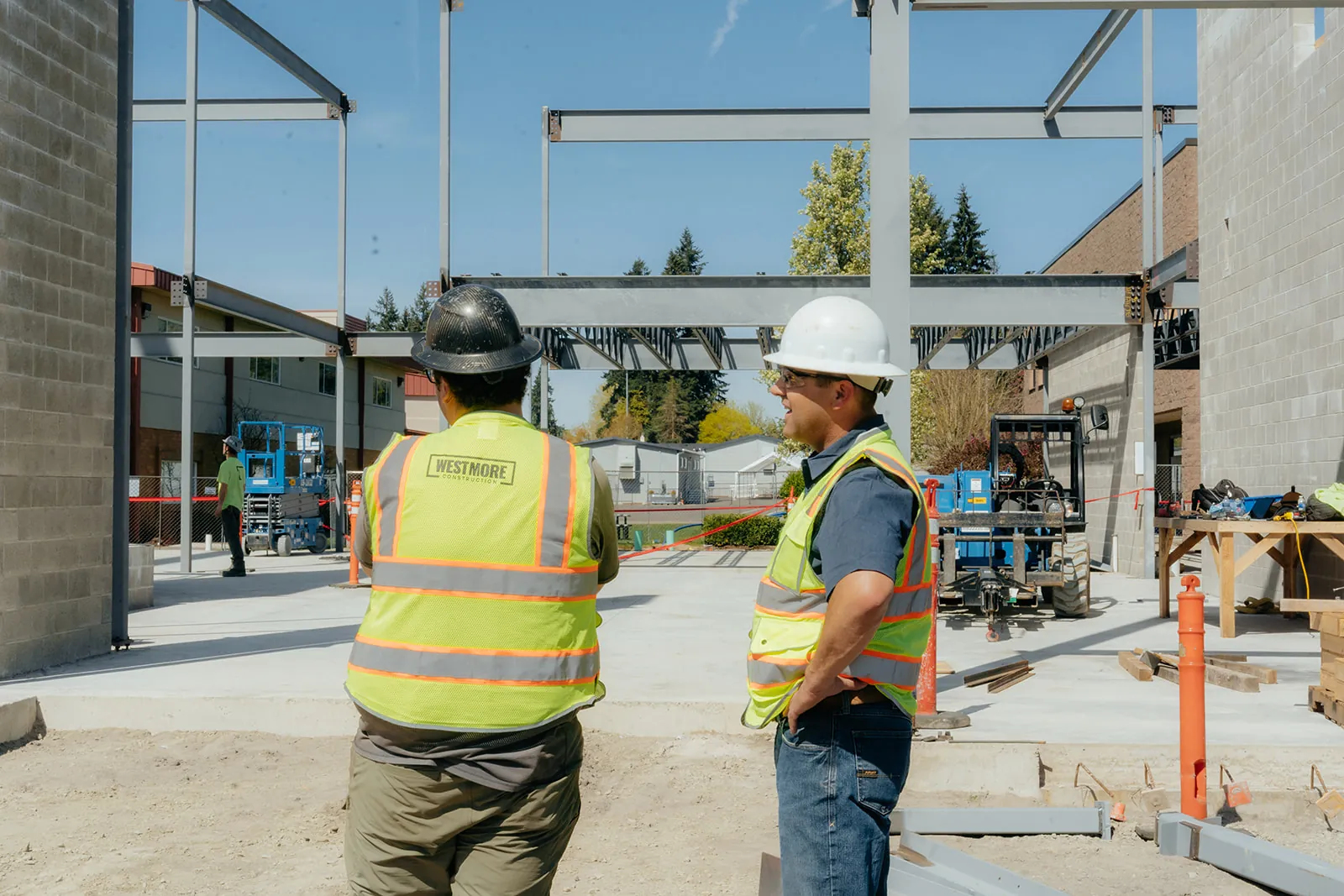
The large-footprint work in this market sits on Tumwater's industrial ground and on Lacey's newer commercial ground, not in Olympia's built-out core, where jobs are more often an addition, an infill building, or a shell reworked around an existing structure. That difference decides the building before the steel is priced: yard depth, dock and trailer circulation, and how much room a crane has beside the building line.
Owners get further faster by bringing those constraints early. Send the lot dimensions, the truck movements the operation needs, and any setback or screening the jurisdiction has already flagged, and the frame gets sized to fit the site rather than the site getting bent around a frame ordered too soon.
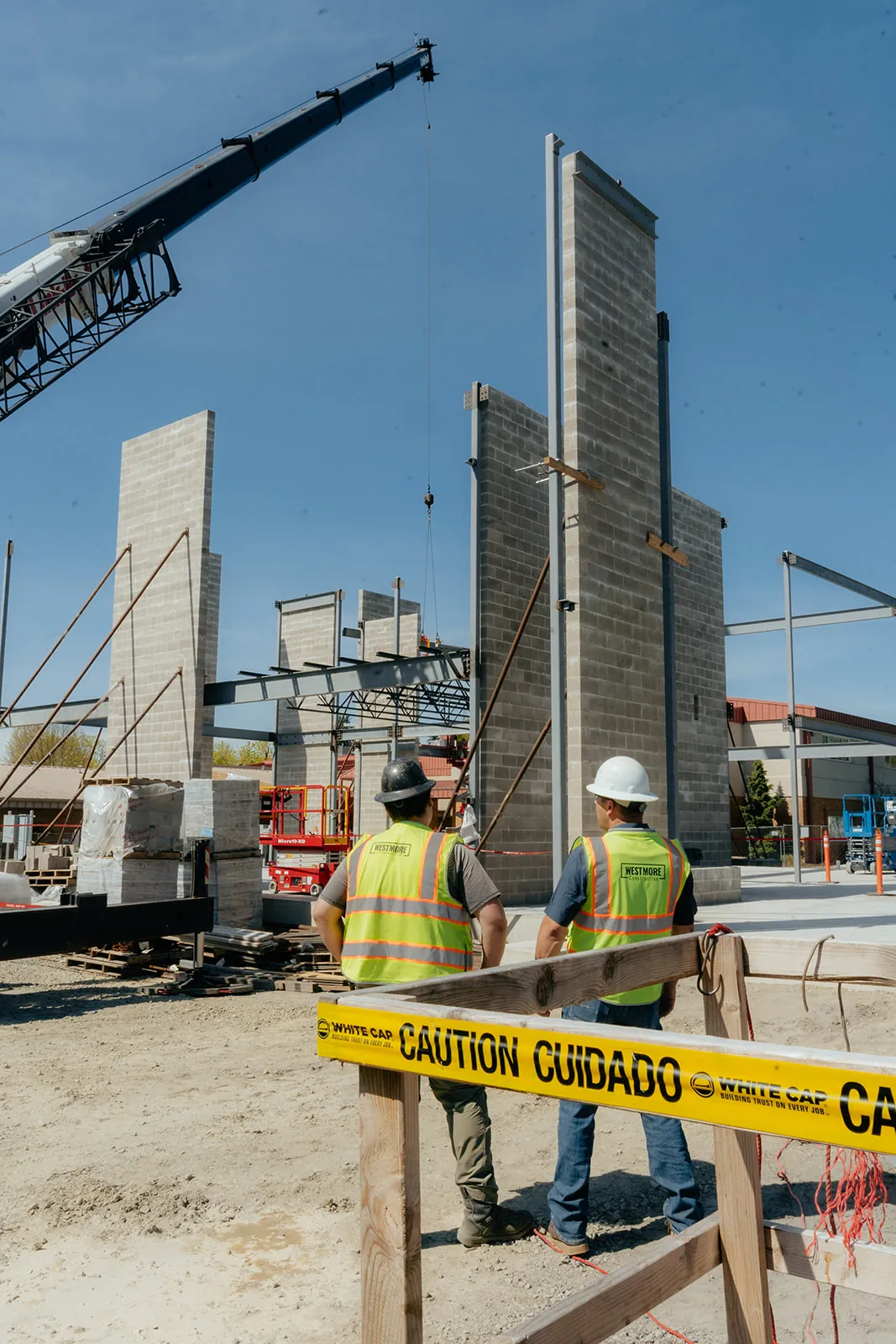
Building near Budd Inlet is not the same as building on an inland lot. A shoreline parcel carries stormwater and site-work conditions an inland one does not, and tidal ground behaves differently under a crane than a compacted pad does. Both are cheap to plan around at the drawing stage and expensive to meet for the first time with an inspector standing on the slab.
Flag a shoreline parcel with the first drawings and every requirement attached to it gets scoped in, from the sitework through the erection sequence. Westmore would rather build a schedule around a known condition than rework one around a condition found late. Say what the site plan already shows and the quote comes back reflecting it.
A Westmore project manager meets the owner on the lot, confirms the footprint and the operation it has to hold, and checks that a full-length steel trailer and a crane can get in, turn, and set up without cutting into the yard.
The steel supplier engineers the building to the approved design, and the building review plus any street-use application clears the jurisdiction the parcel sits in before the package is released.
Columns rise first, then the beams and the joists, with the erection crew's own machine doing the setting so no part of the frame waits on rented equipment.
Panels and roofing go on, doors and glazing follow, and the crew hauls its equipment off the lot once the building is closed and inspected.
Call with the site and what you want standing, or send the basics below and we call back within 24 hours.
"We use Westmore Construction for all our crane needs. They are always responsive, on-time & professional. They're fast and efficient when they show up with no down time. They have multiple sized cranes and can pretty much do anything you need. We have also worked with them on the general contracting side and have no complaints. We will continue to work together."
Google review
"We hired Westmore Construction to build a slant-roof metal building on our property. From the beginning, Warren and his team followed-thru on everything they promised, were always professional and friendly and always reachable on the telephone. Each day, his crew would clean up the job site before heading home and were always respectful of our property. We would highly recommend hiring them."
Google review
"Think Seal Team 6 of Crane Work! Westmore was able to scramble, rearrange their schedule and drive a Crane 15 hours across the state to get us out of a jam on Generator set for Walmart, highly recommend these Professionals"
Google review
There is no fixed price per square foot on a steel building. What the frame has to span and how tall it stands set the steel, the grading, footings, and any fill the ground needs set the concrete, and the extent of the exterior closed in sets the finish work. A warehouse-scale shell in Tumwater and a small shop in Lacey start from different footprints and stay apart from there.
Yes. The machines belong to Westmore and the operators are Westmore employees, so an Olympia, Tumwater, or Lacey frame date does not depend on an equipment yard having a crane free. The operator making the first pick of the day works for the same company as the crew bolting the connection, and both stay on the project until the frame is complete.
Roof first, then walls, then openings. Once the foundation is confirmed against the manufacturer's plans, columns and rafters go up, the roof panels go on, the wall panels follow, and siding, doors, and glazing finish the exterior last. Westmore self-performs that whole sequence with one crew rather than handing the shell to a separate erector partway through, which is why the frame and the finish stay on one schedule.
No, not safely. Anchor bolts are set to the pattern the frame drawings call for, and a frame will not bolt to a slab that missed that pattern. Correcting it after delivery means drilling and epoxying new anchors, or reworking concrete with a truckload of steel already parked on the site. Bolt positions in the finished slab have to match the manufacturer's engineered layout before any steel ships.
No. A crane, its outriggers, and the delivery trucks staying off the street, the sidewalk, and the public right of way means the city's street use process does not come into play. The building permit for the structure applies either way. What decides it is where the machine can physically set up, which is why the setup spot gets worked out from a site plan rather than assumed.
Yes, and they are treated as one market. Tumwater and Lacey carry much of the newer warehouse and commercial construction in this area, while the Olympia core is more built out, so an addition or an infill building is the more common ask there. Each city runs its own building review and its own street permits, which is the main thing that changes with the address.
Steel goes up through the winter here, with the sequence set for it. Rain does not stop erection. Standard lift practice halts a crane for high wind and lightning, not drizzle. The practical adjustments are ground protection so the machine and the trucks do not chew up a wet site, and closing the roof and walls promptly so interior work can start dry. A winter start gets that order fixed early.
Tell us the size, the use, and which of the three cities the parcel sits in, and the scope for erection and finishing comes back written to it.
Battle Ground, WA
Fields marked * are required.
We call back within 24 hours. Prefer to talk? (360) 772-1040